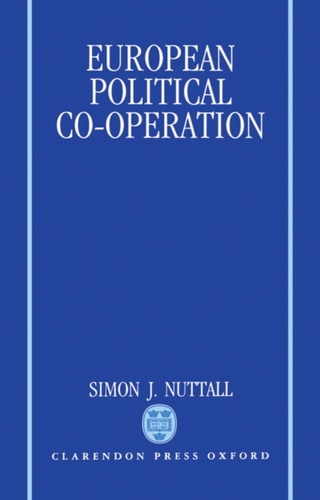
European Political Co-operation
0
0
As an Amazon Associate and affiliate partner, Menrva Books earns from qualifying purchases. Learn more
Author Description
In light of developments in the Middle East and in Eastern Europe, the foreign policy of the European Community is becoming an increasingly important issue--for the institutional development of the Community itself and its influence in the world of international affairs. This work describes the development of the European Political Co-operation, the process by which Member States coordinate their foreign policy. It also traces the influences which have molded the EPC to its current stature. Written from an internal perspective of the EPC, it will interest students and others concerned with policy and the dynamics of institutions.
Menrva's Summary
THE THESIS
This work investigates the origins, institutional evolution, and functional mechanisms of European Political Co-operation (EPC) as a framework for coordinating foreign policy among European Community member states. Simon J. Nuttall, drawing upon his direct experience within the institution, provides a detailed account of how the EPC emerged and adapted to shifting geopolitical landscapes. The text analyzes the internal dynamics that shaped the Community's collective influence on the international stage during a period of significant regional instability. By examining the interplay between national interests and supranational cooperation, the author clarifies the structural constraints and diplomatic objectives that defined the EPC.
THE SCOPE MAP
What You Will Find
- Historical analysis of the development of European foreign policy coordination
- Examination of institutional frameworks and decision-making processes within the European Community
- Case studies regarding the impact of Middle Eastern and Eastern European political developments on policy
- Assessment of the influence exerted by member states on the collective diplomatic stature of the Community
THE AUTHORITY PERSPECTIVE
Experts and scholars of European integration frequently cite this work as a foundational text for understanding the early mechanisms of the EPC. Readers often note the author's unique internal perspective, which provides a level of institutional detail rarely found in broader academic surveys of the period.
Page Count:
352
Publication Date:
1992-08-27
Publisher:
Clarendon Press
ISBN-10:
0198273185
ISBN-13:
9780198273189
International relations
Diplomacy
Government
European federation
European History
Community Tags
Similar Books