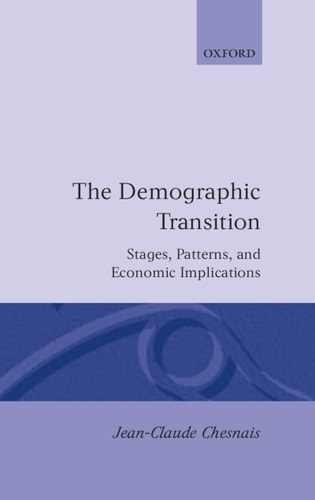
The Demographic Transition: Stages, Patterns, and Economic Implications
0
0
As an Amazon Associate and affiliate partner, Menrva Books earns from qualifying purchases. Learn more
Author Description
The whole sweep of Western experience of the modernization of demographic behavior is dealt with impartially in this work. Though it is technically sophisticated, the book also covers issues of interpretation and analysis of European and non-European demographic transitions. The author argues that less developed countries are following the same general patterns as developed countries, and shows why he believes the theory should include the effect of population changes on the economic progress of society.
Menrva's Summary
THE THESIS
This work investigates whether the demographic transition model, historically observed in Western nations, serves as a universal framework for predicting the modernization of population behavior in developing countries. Jean-Claude Chesnais, a noted demographer, synthesizes extensive historical data to analyze the shift from high birth and death rates to low ones. He argues that population dynamics are inextricably linked to economic progress and that the transition process, while varying in speed and intensity, follows identifiable patterns across both European and non-European contexts.
THE SCOPE MAP
What You Will Find
- Historical analysis of demographic shifts in Western and non-Western societies
- Quantitative assessment of birth and death rate fluctuations
- Theoretical framework linking population growth to economic development
- Comparative study of modernization patterns across different global regions
THE AUTHORITY PERSPECTIVE
Experts recognize this work as a foundational text for understanding the mechanics of demographic transition theory. Readers frequently note the academic density of the prose, which provides a rigorous, data-driven examination of global population trends.
Page Count:
648
Publication Date:
1993-02-25
Publisher:
Clarendon Press
ISBN-10:
0198286597
ISBN-13:
9780198286592
History
Economics
Sociology
Population Studies
Demography
Community Tags
Similar Books