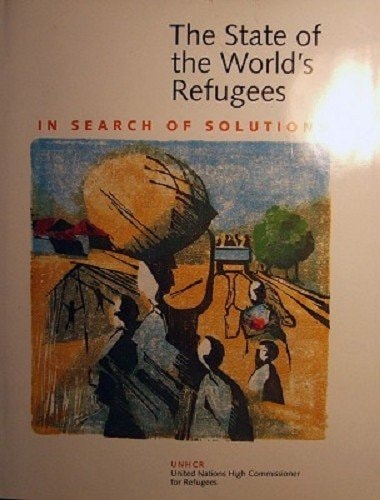
The State of the World's Refugees 1995: In Search of Solutions
0
0
As an Amazon Associate and affiliate partner, Menrva Books earns from qualifying purchases. Learn more
Author Description
Product Description Bosnia, Rwanda, Iraq, Somalia, Chechnya. During the past few years, the world has witnessed a succession of massive refugee movements and humanitarian emergencies. The number of people uprooted by war and persecution now stands at some 50 million, and is increasing every day. Relief agenciesare struggling to keep pace with the demands of each new exodus, while governments around the world are becoming increasingly reluctant to offer refuge to these victims of violence. What can be done to resolve the global refugee problem? That is the question posed in this important book from the United Nations High Commissioner for Refugees, the international organization responsible for the world's displaced people. The book examines the roots of the current crisis, andassesses the continuing relevance of tradional approaches to the problem of human displacement. While the right of asylum must be scrupulously maintained, the book suggests that greater effors must also be made to tackle refugee problems at their source, by restoring peace and security to countrieswhere large numbers of people have been forced to abandon their homes. To achieve this objective, concerted international action will be required to protect human rights, establish effective peacekeeping operations and promote sustainable development. As well as providing a detailed analysis of these major policy issues, this comprehendive study provides a set of detailed charts, graphs, and maps, describing the state of the world's refugees. The books also profiles many of UNHCR's major relief and repatriation operations, showing how newappoaches to the problem of human displacement are being put into practice. About the Author The UNHCR's Advisory Committee includes Christoph Bertram, Robin Cohen, Dhram Ghai, Gil Loescher, Theodor Meron, Astri Suhrke, Valery Tishkov, Myron Weiner, and Thomas Weiss.
Menrva's Summary
THE THESIS
This report investigates the escalating global refugee crisis of the mid-1990s and evaluates the efficacy of traditional international responses to mass human displacement. The United Nations High Commissioner for Refugees (UNHCR) utilizes its extensive institutional data and humanitarian expertise to analyze the root causes of forced migration in conflict zones such as Bosnia, Rwanda, and Somalia. The text argues that while maintaining the right to asylum remains paramount, the international community must pivot toward proactive strategies, including conflict resolution, human rights protection, and sustainable development, to address the origins of displacement.
THE SCOPE MAP
What You Will Find
- Comprehensive analysis of global refugee movements and humanitarian emergencies during the early 1990s.
- Detailed statistical data, including charts, graphs, and maps illustrating the scale of displacement.
- Profiles of specific UNHCR relief and repatriation operations in conflict-affected regions.
- Policy frameworks for international cooperation regarding peacekeeping and human rights advocacy.
THE AUTHORITY PERSPECTIVE
Experts and policy analysts recognize this volume as a foundational institutional record of the UNHCR's strategic shift toward preventative diplomacy in the mid-1990s. Readers frequently note the density of the statistical reporting and the pragmatic, policy-oriented focus of the analysis.
Page Count:
264
Publication Date:
1995-12-28
Publisher:
Oxford University Press
ISBN-10:
0198280440
ISBN-13:
9780198280446
History
Government Policy
Sociology
Human rights
International relations
Community Tags
Similar Books