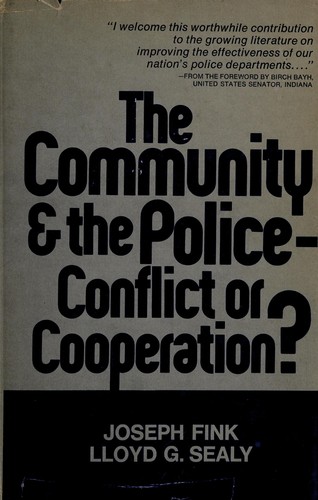
The Community and the Police
0
0
As an Amazon Associate and affiliate partner, Menrva Books earns from qualifying purchases. Learn more
Author Description
Contending that effective law enforcement depends upon cooperation between the police and the public, this book takes a critical look at the problems of police-community relations, and the programs being implemented to resolve them. In the process, it challenges many of the traditional approaches to law enforcement, and offers a new definition of the role of the police. The authors, both former police officers, begin by defining the police and the community. They examine the perceptions the police and community have of each other. Using personal experiences and anecdotes, they develop a portrait of the police recruit and his socialization into the world of law enforcement. A study of the diverse facets of the community is included. This section provides important insight into the basic problems between the police and the community. In part two, the authors describe and evaluate the different programs being used to improve police-community relations, such as community service officers, youth patrols, community councils, and storefronts. It is in this section that the important concepts of conflict management and crisis intervention as basic responsibilities for police officers are presented, and alternative strategies for dealing with crisis situations are discussed. Other important discussions cover stress situations that contribute to police-community alienation, a more comprehensive approach to the patrol function of law enforcement, and the problems of recruiting minorities for police work. The document concludes with an in-depth discussion of the concept of team policing and its practical application. The Holyoke model, a plan found to be most effective both from the standpoint of police efficiency and client approbation, is examined carefully.
Menrva's Summary
THE THESIS
This book investigates the critical role of cooperation between law enforcement and the public in effective policing. The authors, drawing on their backgrounds as former police officers, examine the mutual perceptions between police and community members, detailing the socialization of police recruits. They explore the diverse facets of the community to illuminate the fundamental issues underlying police-community relations, and then critically evaluate various programs designed to improve these interactions, such as community service officers and youth patrols.
THE SCOPE MAP
- Analysis of police-community relations and the challenges therein.
- Examination of police recruit socialization and the law enforcement world.
- Study of diverse community facets and their impact on police interactions.
- Evaluation of programs aimed at improving police-community relations (e.g., community service officers, youth patrols, community councils, storefronts).
- Presentation of conflict management and crisis intervention as core police responsibilities.
- Discussion of stress factors contributing to police-community alienation.
- Exploration of a comprehensive approach to the patrol function.
- Consideration of minority recruitment for police work and the Holyoke model of team policing.
THE AUTHORITY PERSPECTIVE
The book is presented as a critical examination of police-community relations, offering a new definition of the police role based on cooperation. It details programs aimed at improving these relations and discusses concepts like conflict management and crisis intervention. The authors, former police officers, use personal experiences to illustrate their points. The Holyoke model is highlighted as a particularly effective approach.
Page Count:
216
Publication Date:
1974-01-01
ISBN-10:
0471258946
History
Non-Fiction
Sociology
Law Enforcement
Public Administration
Criminology
Community Tags
Similar Books