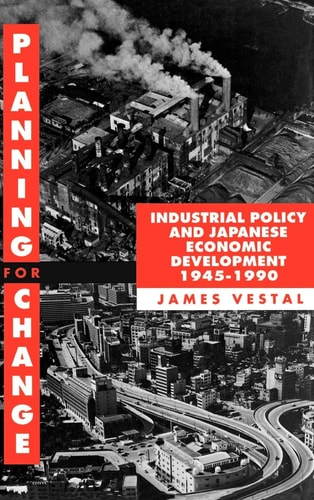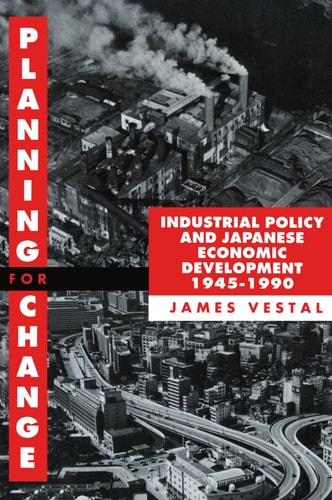
Planning for Change: Industrial Policy and Japanese Economic Development, 1945-1990
0
0
As an Amazon Associate and affiliate partner, Menrva Books earns from qualifying purchases. Learn more
Author Description
What has been the role of government industrial policy in Japan's extraordinary post-war development? How has the role changed in successive phases of growth? What "lessons" can be learnt from this experience by other nations, be they in the West, or developing countries or economies in transition attempting to introduce competitive market structures? These are some of the main questions addressed in this absorbing and thorough study. Dividing the period into three main phases, the author shows that policy played a crucial role in the initial period of post-war recovery. It did so not by "picking winners" but by creating a stable base from which development could occur by spreading the cost of introducing market competition over time. In the succeeding high growth period, and more recently, Japan's industrial policy attempts only to promote the development of new technology, and smooth the decline of sectors that are no longer globally competitive. That Japan itself no longer practices industrial policy on a wide scale is an irony little appreciated by those advocating the adoption of a "Japan-style" industrial policy elsewhere.
Menrva's Summary
THE THESIS
What has been the role of government industrial policy in Japan's extraordinary post-war development, and what lessons can other nations derive from this experience? James E. Vestal examines the evolution of Japanese economic strategy from 1945 to 1990, utilizing historical data and economic analysis to challenge common misconceptions about state intervention. He argues that industrial policy functioned not as a mechanism for picking winners, but as a stabilizing force that facilitated market competition and technological advancement across distinct developmental phases.
THE SCOPE MAP
What You Will Find
- Analysis of three distinct phases of Japanese post-war economic growth.
- Evaluation of the transition from recovery-focused policy to technology promotion.
- Examination of the state's role in managing the decline of non-competitive industrial sectors.
- Comparative assessment of Japan's model for developing nations and economies in transition.
THE AUTHORITY PERSPECTIVE
Experts recognize this work as a rigorous historical analysis that clarifies the nuanced reality of Japan's industrial policy. Readers frequently note the academic density of the prose, which serves as a foundational text for those studying the intersection of government intervention and market-driven development.
Page Count:
256
Publication Date:
1995-12-14
Publisher:
Clarendon Press
ISBN-10:
0198290276
ISBN-13:
9780198290278
Economics
History
Japan
Industrial Policy
Community Tags
Similar Books