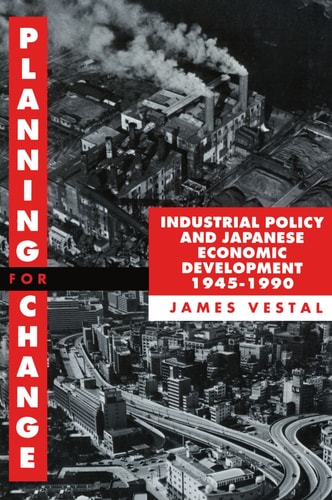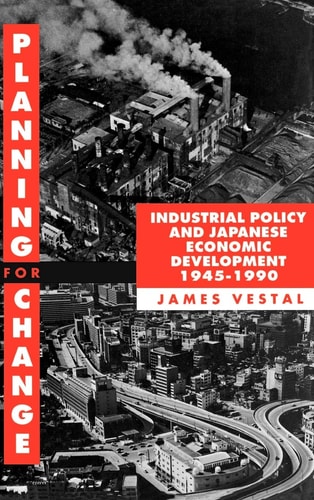
Planning for Change: Industrial Policy and Japanese Economic Development 1945-1990
0
0
As an Amazon Associate and affiliate partner, Menrva Books earns from qualifying purchases. Learn more
Author Description
In addition to providing an overview of Japanese development and industrial policy measures used during the 1945-1990 period, this book assesses the contribution that industrial policy made to Japan's phenomenal economic success. James Vestal concludes that a stable, gradual, and long term perspective was key to Japan's development, rather than "picking winners." Policy makers selectively blocked competition in inefficient sectors in order to maintain employment, which was necessary given that Japan's productive capital was decimated in the war. Barriers to competition were raised as the Japanese economy became able to provide full employment at above subsistence wages. Given the enormous upheaval associated with introducing a competitive market structure, the Japanese case has important lessons for Russia and Eastern European nations today.
Menrva's Summary
THE THESIS
This book investigates the specific role and efficacy of industrial policy in Japan's economic development between 1945 and 1990. James E. Vestal, an economist specializing in Japanese markets, utilizes historical data and policy analysis to challenge the notion that the Japanese government succeeded primarily by picking industrial winners. Instead, he argues that the state's focus on long-term stability and the strategic management of competition in inefficient sectors provided the necessary framework for post-war recovery and growth.
THE SCOPE MAP
What You Will Find
- Analysis of Japanese industrial policy measures from 1945 to 1990.
- Assessment of the relationship between employment maintenance and market competition.
- Comparative insights regarding the transition of command economies toward competitive market structures.
- Evaluation of the long-term perspective in state-led economic planning.
THE AUTHORITY PERSPECTIVE
Experts recognize this work as a significant contribution to the study of the Japanese economic miracle, particularly for its nuanced view on state intervention. Readers frequently note the clarity of the author's argument regarding the transition from protectionist policies to competitive market structures.
Page Count:
256
Publication Date:
1994-01-27
Publisher:
Clarendon Press
ISBN-10:
0198288085
ISBN-13:
9780198288084
History
Economics
Industrial Policy
Japan
Community Tags
Similar Books