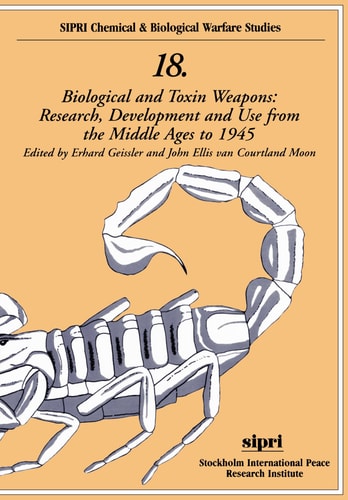
Biological and Toxin Weapons: Research, Development and Use from the Middle Ages to 1945
0
0
As an Amazon Associate and affiliate partner, Menrva Books earns from qualifying purchases. Learn more
Author Description
This interdisciplinary book analyzes the origins of biological warfare planning and preparation up to the end of World War II. In the period between the world wars, growing understanding of the propagation of disease lead to the fear that potential enemies might be developing biological weapons, with several countries ultimately developing major biological warfare programs during World War II. The relevance of these programs to contemporary concerns is addressed and sheds light on arguments for adoption of a verification protocol to strengthen the 1972 Biological and Toxin Weapons Convention.
Menrva's Summary
THE THESIS
This work investigates the historical evolution, strategic motivations, and technical development of biological and toxin weapons from the Middle Ages through the conclusion of World War II. The authors, Erhard Geissler and John Ellis van Courtland Moon, utilize extensive archival research and historical analysis to document how advancements in microbiology and epidemiology fueled state-sponsored weaponization programs. By tracing the trajectory of these programs, the text establishes a framework for understanding the persistent security challenges that necessitated the 1972 Biological and Toxin Weapons Convention.
THE SCOPE MAP
What You Will Find
- Historical analysis of biological warfare planning from medieval times to 1945
- Examination of the interwar period and the rise of state-level biological research
- Case studies of major biological warfare programs developed during World War II
- Contextualization of historical developments within the framework of modern arms control and verification protocols
THE AUTHORITY PERSPECTIVE
Experts recognize this volume as a foundational historical resource for understanding the origins of modern bioweapons policy. Readers frequently note the academic density of the prose and the rigorous documentation provided by the authors.
Page Count:
296
Publication Date:
1999-11-25
Publisher:
Stockholm International Peace Research Institute
ISBN-10:
0198295790
ISBN-13:
9780198295792
History
Science
Military History
Chemical Warfare
Community Tags
Similar Books