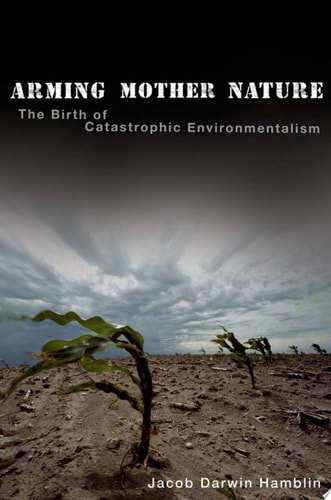
Arming Mother Nature: The Birth of Catastrophic Environmentalism
0
0
As an Amazon Associate and affiliate partner, Menrva Books earns from qualifying purchases. Learn more
Author Description
When most Americans think of environmentalism, they think of the political left, of vegans dressed in organic-hemp fabric, lofting protest signs. In reality, writes Jacob Darwin Hamblin, the movement--and its dire predictions--owe more to the Pentagon than the counterculture.In Arming Mother Nature, Hamblin argues that military planning for World War III essentially created "catastrophic environmentalism": the idea that human activity might cause global natural disasters. This awareness, Hamblin shows, emerged out of dark ambitions, as governments poured funds into environmental science after World War II, searching for ways to harness natural processes--to kill millions of people. Proposals included the use of nuclear weapons to create artificial tsunamis or melt the ice caps to drown coastal cities; setting fire to vast expanses of vegetation; and changing local climates. Oxford botanists advised British generals on how to destroy enemy crops during the war in Malaya; American scientists attempted to alter the weather in Vietnam. This work raised questions that went beyond the goal of weaponizing nature. By the 1980s, the C.I.A. was studying the likely effects of global warming on Soviet harvests. "Perhaps one of the surprises of this book is not how little was known about environmental change, but rather how much," Hamblin writes. Driven initially by strategic imperatives, Cold War scientists learned to think globally and to grasp humanity's power to alter the environment. "We know how we can modify the ionosphere," nuclear physicist Edward Teller proudly stated. "We have already done it." Teller never repented. But many of the same individuals and institutions that helped the Pentagon later warned of global warming and other potential disasters. Brilliantly argued and deeply researched, Arming Mother Nature changes our understanding of the history of the Cold War and the birth of modern environmental science.
Menrva's Summary
THE THESIS
This book investigates the origins of modern catastrophic environmentalism, arguing that the concept emerged not from countercultural movements, but from Cold War military planning and the desire to weaponize natural processes. Jacob Darwin Hamblin, a professor of history, utilizes extensive archival research and declassified military documents to trace how post-World War II strategic imperatives led governments to fund environmental science. He posits that the same scientific institutions and individuals tasked with developing methods to manipulate climate and ecology for warfare later became the primary voices warning of global environmental collapse.
THE SCOPE MAP
What You Will Find
- Historical analysis of Cold War military research into weather modification and environmental warfare.
- Documentation of specific proposals, including artificial tsunamis, melting ice caps, and crop destruction.
- Examination of the transition from military-funded environmental science to contemporary climate change discourse.
- Case studies involving American and British scientific involvement in strategic environmental manipulation.
THE AUTHORITY PERSPECTIVE
Experts and historians recognize this work as a significant contribution to the history of science, noting the author's ability to synthesize complex military and environmental data. Readers frequently highlight the density of the archival research and the provocative nature of the author's central argument regarding the military origins of environmental awareness.
Page Count:
320
Publication Date:
2013-01-01
Publisher:
Oxford University Press
ISBN-10:
0199911592
ISBN-13:
9780199911592
History
Nature
Cold War
Military History
Science History
Chemical Warfare
Community Tags
Similar Books