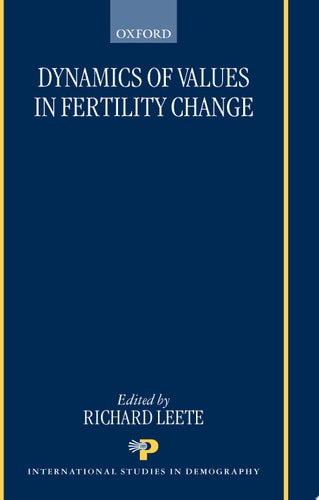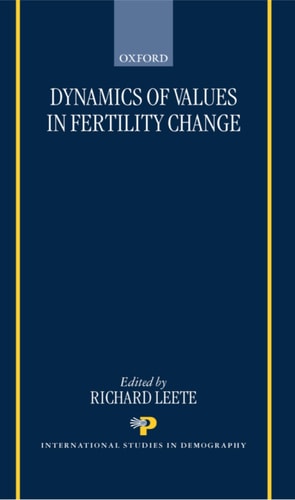
Dynamics of Values in Fertility Change
0
0
As an Amazon Associate and affiliate partner, Menrva Books earns from qualifying purchases. Learn more
Author Description
The move from large extended families towards the nuclear family already prevalent in the West is one of the most notable demographic trends of the 20th Century. In exploring this "fertility transition" this volume investigates and explains the impact that changing cultural and moral beliefs have had on fertility practice. The contributors create a global picture through a wide variety of theoretical approaches combined with highly focused empirical studies.
Menrva's Summary
THE THESIS
This volume investigates the extent to which shifting cultural and moral values drive the global transition from large extended families to smaller nuclear family structures. Editor Richard Leete compiles a series of academic contributions that analyze the fertility transition across diverse international contexts. By integrating theoretical frameworks with empirical data, the text argues that demographic shifts cannot be understood through economic factors alone but require a deep examination of changing societal norms and belief systems.
THE SCOPE MAP
What You Will Find
- Comparative analysis of fertility trends across Western and non-Western societies.
- Theoretical models linking cultural evolution to reproductive behavior.
- Empirical case studies utilizing longitudinal demographic data.
- Examination of the transition from extended to nuclear family units.
THE AUTHORITY PERSPECTIVE
Experts recognize this volume as a significant contribution to the study of demographic transitions, particularly for its focus on the intersection of sociology and population dynamics. Readers frequently note the academic density of the prose, which serves as a foundational resource for researchers interested in the cultural drivers of family planning.
Page Count:
400
Publication Date:
1999-06-10
Publisher:
Clarendon Press
ISBN-10:
0198294395
ISBN-13:
9780198294399
Birth control
Demography
Sociology
Population Studies
Social Science