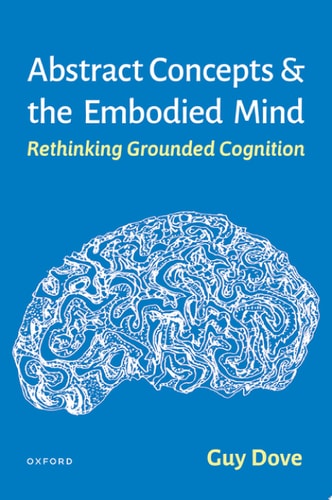
Abstract Concepts and the Embodied Mind: Rethinking Grounded Cognition
0
0
As an Amazon Associate and affiliate partner, Menrva Books earns from qualifying purchases. Learn more
Author Description
Our thoughts depend on knowledge about objects, people, properties, and events. To think about where we left our keys, what we are going to make for dinner, when we last fed the dogs, and how we are going to survive our next visit with our family, we need to know something about locations, keys, cooking, dogs, survival, families, and so on. As researchers have sought to explain how our brains can store and access such general knowledge, a growing body of evidence suggests that many of our concepts are grounded in action, emotion, and perception systems.We appear to think about the world by means of the same mechanisms that we use to experience it. Yet, abstract concepts like 'democracy,' 'fermion,' 'piety,' 'truth,' and 'zero' represent a clear challenge to this idea. Given that they represent a uniquely human cognitive achievement, answering the question of how we acquire and use them is central to our ability to understand ourselves. In Abstract Concepts and the Embodied Mind, Guy Dove contends that abstract concepts are heterogeneous and pose three important challenges to embodied cognition. They force us to ask: How do we generalize beyond the specifics of our experience? How do we think about things that we do not experience directly? How do we adapt our thoughts to specific contexts and tasks? He further argues that a successful theory of grounding must embrace multimodal representations, hierarchical architecture, and linguistic scaffolding.Focusing on a topic that has generated a lot of recent interest, this book shows that abstract concepts are the product of an elastic mind.
Menrva's Summary
THE THESIS
How do human beings represent and process abstract concepts within a cognitive framework that is primarily grounded in sensory, motor, and emotional experience? Guy Dove, a researcher in cognitive science, examines the limitations of traditional embodied cognition theories when applied to non-perceptual concepts. He argues that abstract thought requires a more complex, heterogeneous architecture that integrates multimodal representations, hierarchical structures, and linguistic scaffolding to account for human conceptual flexibility.
THE SCOPE MAP
What You Will Find
- Analysis of the challenges posed by abstract concepts like democracy, truth, and mathematical entities.
- A proposed framework for grounded cognition that includes hierarchical and multimodal systems.
- Evaluation of how linguistic scaffolding facilitates the transition from concrete experience to abstract reasoning.
Scope Limits
- The text does not provide a comprehensive neurological map of every specific abstract concept.
- It focuses primarily on cognitive architecture rather than clinical or therapeutic applications.
THE AUTHORITY PERSPECTIVE
Experts in cognitive science recognize this work as a significant contribution to the ongoing debate regarding embodied cognition and its limitations. Readers frequently note the academic density of the prose, which is intended for scholars and students familiar with current theories of mind.
Page Count:
280
Publication Date:
2022-07-22
Publisher:
Oxford University Press
ISBN-10:
0190061979
ISBN-13:
9780190061975
Psychology
Philosophy
Politics
Philosophy of
New Used & Rental Textbooks
Cognitive Psychology
Social Philosophy
Linguistics
Mind & Body
Neuroscience
Psychology
Medical Books
Consciousness & Thought
Medicine
Cognitive
Allied Health
Community Tags
Similar Books