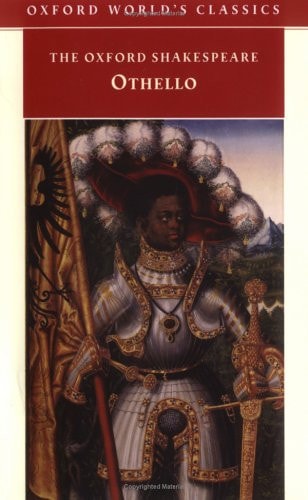
Othello
0
0
As an Amazon Associate and affiliate partner, Menrva Books earns from qualifying purchases. Learn more
Author Description
In Othello, Shakespeare creates a powerful drama of a marriage that begins with fascination (between the exotic Moor Othello and the Venetian lady Desdemona), with elopement, and with intense mutual devotion and that ends precipitately with jealous rage and violent deaths. He sets this story in the romantic world of the Mediterranean, moving the action from Venice to the island of Cyprus and giving it an even more exotic coloring with stories of Othello's African past. Shakespeare builds so many differences into his hero and heroine—differences of race, of age, of cultural background—that one should not, perhaps, be surprised that the marriage ends disastrously. But most people who see or read the play feel that the love that the play presents between Othello and Desdemona is so strong that it would have overcome all these differences were it not for the words and actions of Othello's standard-bearer, Iago, who hates Othello and sets out to destroy him by destroying his love for Desdemona. As Othello succumbs to Iago's insinuations that Desdemona is unfaithful, fascination—which dominates the early acts of the play—turns to horror, especially for the audience. We are confronted by spectacles of a generous and trusting Othello in the grip of Iago's schemes; of an innocent Desdemona, who has given herself up entirely to her love for Othello only to be subjected to his horrifying verbal and physical assaults, the outcome of Othello's mistaken convictions about her faithlessness.
Menrva's Summary
THE PULSE
The marriage of the Moorish general Othello and the Venetian noblewoman Desdemona is systematically dismantled by the manipulative machinations of Iago. Othello, a respected military leader, finds his professional and personal life unraveling as his ensign, Iago, plants seeds of doubt regarding his wife's fidelity. The narrative follows a linear progression from the political intrigue of Venice to the isolated military outpost of Cyprus, where the constraints of social hierarchy and racial prejudice amplify the protagonist's internal instability. Written in a combination of blank verse and prose, the play examines the rapid erosion of trust under the pressure of psychological warfare.
INSIDE THE PAGES
- Use of dramatic irony to heighten audience tension regarding Iago's true intentions.
- Exploration of the destructive nature of unchecked jealousy and insecurity.
- Contrast between the public military sphere and the private domestic sphere.
- Utilization of soliloquies to reveal the antagonist's motivations and internal logic.
- Symbolic use of a handkerchief as a catalyst for the tragic climax.
- Examination of racial and cultural alienation within a Venetian societal framework.
- Shift in tone from romantic idealism to psychological horror.
- Structural reliance on the five-act dramatic arc common to Elizabethan theater.
THE COLLECTIVE ECHO
Discussion often centers on the psychological complexity of Iago and whether his malice is motivated by professional envy or a deeper, inherent nihilism. Readers frequently highlight the stark contrast between the initial portrayal of Othello as a noble, composed leader and his eventual descent into irrational, violent paranoia. Critics often analyze the play's exploration of how external manipulation exploits existing societal prejudices to isolate the protagonist from his support systems. The play remains a frequent subject of study regarding the mechanics of domestic tragedy and the devastating impact of misinformation on human relationships.
Page Count:
192
Publication Date:
1968-01-01
Publisher:
Penguin Books
ISBN-10:
0198313993
ISBN-13:
9780198313991
Drama
Plays
classic
Tragedy
Renaissance
Community Tags
Similar Books