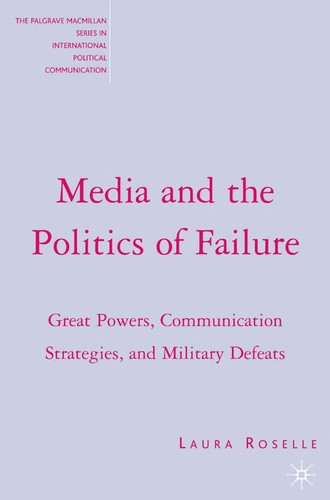
Media and the Politics of Failure: Great Powers, Communication Strategies, and Military Defeats
0
0
As an Amazon Associate and affiliate partner, Menrva Books earns from qualifying purchases. Learn more
Author Description
Great powers are not supposed to lose wars, so how do leaders explain military defeat when it happens? Media and the Politics of Failure analyzes the American experience in Vietnam and the Soviet experience in Afghanistan to draw larger conclusions about how and why political leaders explain the end of military involvement. In spite of differences in political and media systems, there are remarkable similarities between American and Soviet leaders? communication strategies. Great power identity and domestic politics shape an explanation of withdrawal that emphasizes success and invokes prestige. The factors that shape the construction of the story did not disappear with the end of the Cold War, thus this work offers important insights for current American and Russian military efforts.
Menrva's Summary
THE THESIS
Great powers are not supposed to lose wars, so how do leaders explain military defeat when it happens?
Laura Roselle's work analyzes the American experience in Vietnam and the Soviet experience in Afghanistan to understand how and why political leaders explain the end of military involvement. Despite differences in their political and media systems, American and Soviet leaders employed remarkably similar communication strategies. The book argues that great power identity and domestic politics shape explanations of withdrawal, often emphasizing success and invoking prestige. These factors continue to influence current military efforts, offering insights into contemporary American and Russian engagements.
THE SCOPE MAP
- Analysis of American communication strategies during the Vietnam War.
- Analysis of Soviet communication strategies during the Afghanistan War.
- Comparison of political and media systems in the US and USSR regarding military defeat.
- Examination of how great power identity influences explanations of withdrawal.
- Exploration of the role of domestic politics in shaping narratives of military involvement.
- Discussion of communication strategies that emphasize success and invoke prestige.
- Application of findings to current American and Russian military efforts.
THE AUTHORITY PERSPECTIVE
This work offers a comparative analysis of how great powers explain military defeats, focusing on the communication strategies employed by American leaders during the Vietnam War and Soviet leaders during the Afghanistan War. The book highlights striking similarities in these strategies despite differing political and media systems, suggesting that national identity and domestic politics play crucial roles in constructing narratives of withdrawal that often emphasize success and prestige. The author posits that these dynamics remain relevant for understanding contemporary military engagements, particularly those involving the United States and Russia. The analysis provides a framework for understanding how political leaders manage public perception in the face of military setbacks.
Page Count:
190
Publication Date:
2006-01-01
ISBN-10:
1403975256
History
Non-Fiction
Art
Politics
Media Studies
Military History
International relations
Community Tags
Similar Books