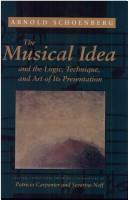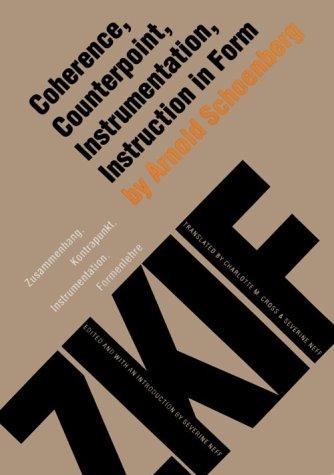
Coherence, Counterpoint, Instrumentation, Instruction in Form
0
0
As an Amazon Associate and affiliate partner, Menrva Books earns from qualifying purchases. Learn more
Author Description
Only Stravinsky can claim as much credit as Schoenberg for the most dramatic innovations in twentieth-century music. Inventor of the twelve-tone row, explorer of atonality and the hexachord, composer of tone poems, songs, and chamber music, and chief spokesman for the Vienna Circle, Schoenberg has become ever more influential as his successors have come to understand him. Fuller understanding has been delayed because many of his writings have not yet been edited or published. This volume collects four short works, each concentrated on a key issue in composition. Written in 1917, but altered and augmented many times in later years, the manuscripts edited and translated in this volume have never been published before. Their importance can permit no further delay since they present Schoenberg's thinking well after the publication in 1911 of Harmonielehre, his revolutionary theoretical book. The later texts provide numerous prospects for enhancing the study and appreciation of Schoenberg's compositions and theories. Also a painter, Schoenberg enjoyed the friendship of Kandinsky and the Berlin expressionists. This volume includes a frontispiece reproducing one of Schoenberg's paintings.--BOOK JACKET.
Menrva's Summary
THE THESIS
This volume presents four previously unpublished works by Arnold Schoenberg, offering critical insights into his compositional theories after his seminal 1911 text, Harmonielehre. These texts, written and revised between 1917 and later years, focus on key issues in musical composition, including coherence, counterpoint, instrumentation, and form. As a pivotal figure in twentieth-century music, Schoenberg's innovations in atonality and the twelve-tone row continue to influence contemporary composers. The collection provides a valuable resource for enhancing the study and appreciation of his compositions and theoretical frameworks.
THE SCOPE MAP
- What You Will Find:
- Four short, previously unpublished works by Arnold Schoenberg.
- Texts focusing on coherence, counterpoint, instrumentation, and form in composition.
- Insights into Schoenberg's theoretical thinking post-Harmonielehre (1911).
- Explanations of his approach to atonality and the twelve-tone row.
- A frontispiece reproducing one of Schoenberg's paintings.
- Material intended to enhance the study and appreciation of his compositions and theories.
THE AUTHORITY PERSPECTIVE
This collection of Schoenberg's theoretical writings is regarded as a significant contribution to musicological scholarship, offering direct access to his evolving compositional thought. The previously unpublished nature of these texts, particularly their placement after his major theoretical work, makes them essential for a fuller understanding of his impact. The inclusion of his artwork also provides a broader context for his creative output. The material is expected to be of particular interest to scholars, composers, and advanced music students seeking to deepen their knowledge of Schoenberg's influential theories and practices.
Page Count:
135
Publication Date:
1994-01-01
ISBN-10:
0803242301
Non-Fiction
Music
Composition
Music theory
Musicology
Community Tags
Similar Books