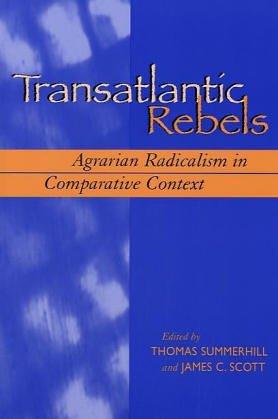
Transatlantic Rebels
0
0
As an Amazon Associate and affiliate partner, Menrva Books earns from qualifying purchases. Learn more
Author Description
This collection by an international array of historians examines agrarian radicalism in comparative context from 1500 to the present. What unifies the studies presented here is a shared interest in the ways in which agrarian people in the Atlantic world interacted with each other; transmitted and translated ideas; developed new crops or methods; or formulated critiques of the existing social, economic, and political order. All agree, to varying extents, that the Atlantic world is best conceptualized not as a rigid barrier between nations, peoples, and cultures, but rather a frontier, a permeable space with eddies and currents of ideas, cultivars, and human beings. And, as these essays indicate, "radicalism" can be found not only in the political realm, but also in the rate and extent of social, economic, and environmental change.--Jacket.
Menrva's Summary
THE THESIS
This collection investigates the concept of agrarian radicalism across the Atlantic world from 1500 to the present day. The book brings together an international array of historians to examine how agrarian peoples interacted, exchanged ideas, adopted new agricultural practices, and challenged existing social, economic, and political structures. It posits the Atlantic world not as a dividing line, but as a permeable frontier where ideas, crops, and people flowed freely. The essays demonstrate that radicalism can manifest not only in political dissent but also in significant social, economic, and environmental transformations.
THE SCOPE MAP
- What You Will Find:
- Comparative studies of agrarian radicalism across the Atlantic world from 1500 to the present.
- Analysis of interactions, idea transmission, and cultural exchange among agrarian populations.
- Examination of the development and adoption of new crops and agricultural methods.
- Exploration of critiques formulated against existing social, economic, and political orders.
- Conceptualization of the Atlantic world as a permeable frontier rather than a rigid barrier.
- Discussion of radicalism in political, social, economic, and environmental change.
THE AUTHORITY PERSPECTIVE
This collection is regarded as a significant contribution to the study of agrarian history and the Atlantic world, offering a comparative perspective that challenges traditional notions of national boundaries. The essays collectively highlight the dynamic and interconnected nature of agrarian societies, demonstrating how ideas and innovations traversed the Atlantic. Scholars have noted the book's nuanced approach to defining 'radicalism,' extending its scope beyond purely political movements to encompass broader societal and environmental shifts. The comparative framework provides valuable insights into the shared experiences and distinct developments of agrarian peoples across different regions and time periods.
Page Count:
300
Publication Date:
2004-01-01
ISBN-10:
0870137271
ISBN-13:
9780870137273
History
Non-Fiction
Comparative History
Economic History
Political History
Social History
Atlantic World
Community Tags
Similar Books