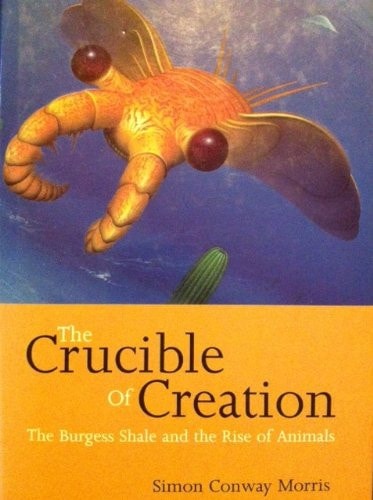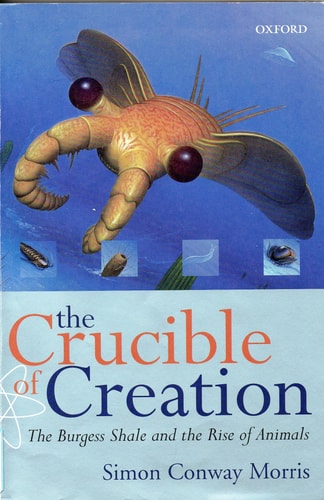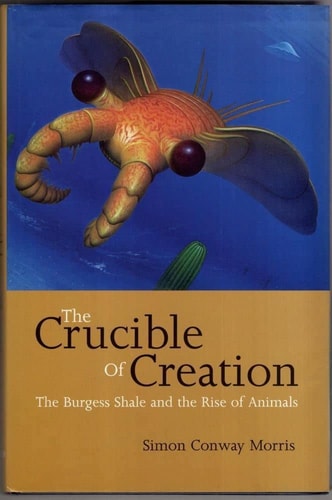
The Crucible of Creation: The Burgess Shale and the Rise of Animals
0
0
As an Amazon Associate and affiliate partner, Menrva Books earns from qualifying purchases. Learn more
Author Description
In The Crucible of Creation, paleontologist Simon Conway Morris describes the marvelous finds of the Burgess Shale--a fantastically rich deposit of bizarre and bewildering Cambrian fossils, located in Western Canada.Conway Morris is one of the few paleontologists ever to explore the Burgess Shale, having been involved in the dig since 1972, and thus he is an ideal guide to this amazing discovery. Indeed, he provides a complete overview of this remarkable find, ranging from an informative, basic discussion of the origins of life and animals on earth, to a colorful description of Charles Walcott's discovery of the Burgess Shale and of the painstaking scientific work that went on there (as well as in Burgess collections held at Harvard and the Smithsonian), to an account of similar fossil finds in Greenland and in China. The heart of the book is an imaginative trip in a time machine, back to the Cambrian seas, where the reader sees first-hand the remarkable diversity of life as it existed then. And perhaps most important, Conway Morris examines the lessons to be learned from the Burgess Shale, especially as they apply to modern evolutionary thinking. In particular, he critiques the ideas of Stephen Jay Gould, whose best-selling book Wonderful Life drew on Conway Morris's Burgess Shale work. The author takes a fresh look at the evidence and draws quite different conclusions from Gould on the nature of evolution.This finely illustrated volume takes the reader to the forefront of paleontology as it provides fresh insights into the nature of evolution and of life on earth.
Menrva's Summary
THE THESIS
How does the fossil record of the Burgess Shale challenge our understanding of evolutionary patterns and the history of animal life? Simon Conway Morris, a leading paleontologist with decades of field experience at the Burgess Shale site, utilizes his extensive research to provide a comprehensive analysis of Cambrian fauna. He presents a rigorous examination of fossil evidence to argue for a more predictable and constrained view of evolutionary development, directly engaging with and critiquing the interpretations popularized by Stephen Jay Gould.
THE SCOPE MAP
What You Will Find
- Detailed analysis of the Cambrian explosion and the emergence of complex animal life.
- Historical documentation of the Burgess Shale discovery by Charles Walcott.
- Comparative studies of fossil deposits found in Greenland and China.
- A critical evaluation of evolutionary contingency versus convergence.
THE AUTHORITY PERSPECTIVE
Experts recognize this work as a significant contribution to the debate surrounding evolutionary theory and the interpretation of the Cambrian fossil record. Readers frequently note the academic density of the prose, which serves as a detailed counterpoint to more popularized accounts of the same subject matter.
Page Count:
242
Publication Date:
1998-05-07
Publisher:
Oxford University Press
ISBN-10:
0198502567
ISBN-13:
9780198502562
Science
Geology
Paleontology
Creation
Evolutionary Biology
Evolution
Fossils