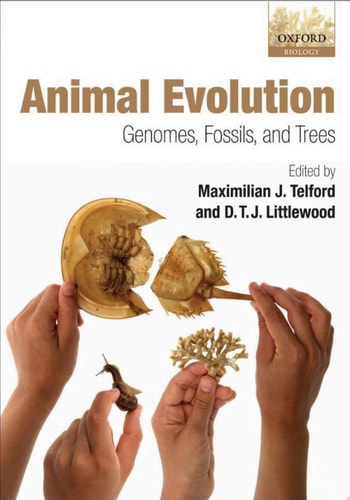
Animal Evolution: Genomes, Fossils, and Trees
0
0
As an Amazon Associate and affiliate partner, Menrva Books earns from qualifying purchases. Learn more
Author Description
Animal life, now and over the past half billion years, is incredibly diverse. Describing and understanding the evolution of this diversity of body plans - from vertebrates such as humans and fish to the numerous invertebrate groups including sponges, insects, molluscs, and the many groups of worms - is a major goal of evolutionary biology. In this book, a group of leading researchers adopt a modern, integrated approach to describe how current molecular genetic techniques and disciplines as diverse as palaeontology, embryology, and genomics have been combined, resulting in a dramatic renaissance in the study of animal evolution. The last decade has seen growing interest in evolutionary biology fuelled by a wealth of data from molecular biology. Modern phylogenies integrating evidence from molecules, embryological data, and morphology of living and fossil taxa provide a wide consensus of the major branching patterns of the tree of life; moreover, the links between phenotype and genotype are increasingly well understood. This has resulted in a reliable tree of relationships that has been widely accepted and has spawned numerous new and exciting questions that require a reassessment of the origins and radiation of animal life. The focus of this volume is at the level of major animal groups, the morphological innovations that define them, and the mechanisms of change to their embryology that have resulted in their evolution. Current research themes and future prospects are highlighted including phylogeny reconstruction, comparative developmental biology, the value of different sources of data and the importance of fossils, homology assessment, character evolution, phylogeny of major groups of animals, and genome evolution. These topics are integrated in the light of a 'new animal phylogeny', to provide fresh insights into the patterns and processes of animal evolution. Animal Evolution provides a timely and comprehensive statement of progress in the field for academic re
Menrva's Summary
THE THESIS
This volume investigates the mechanisms and patterns of animal evolution by synthesizing data from molecular genetics, paleontology, and embryology. The authors, a collective of leading researchers in evolutionary biology, present an integrated framework that utilizes modern phylogenies to map the history of animal life. By linking phenotypic innovations to genotypic changes, the text provides a comprehensive reassessment of the origins and radiation of major animal groups.
THE SCOPE MAP
What You Will Find
- Analysis of major animal body plans and morphological innovations
- Integration of molecular phylogenies with fossil record data
- Examination of comparative developmental biology and genome evolution
- Discussion of homology assessment and character evolution
Scope Limits
- The text focuses primarily on major animal groups rather than individual species-level microevolution
- It assumes a foundational knowledge of evolutionary biology and genetics
THE AUTHORITY PERSPECTIVE
Experts identify this volume as a significant synthesis of the 'new animal phylogeny' that emerged from the integration of molecular and morphological data. Readers frequently note the academic density of the prose, making it a suitable resource for advanced students and researchers in the biological sciences.
Page Count:
545
Publication Date:
2009-01-01
Publisher:
OUP Oxford
ISBN-10:
0191579130
ISBN-13:
9780191579134
Science
Zoology
Paleontology
Evolutionary Biology
Genetics
Evolution
Academic
Community Tags
Similar Books