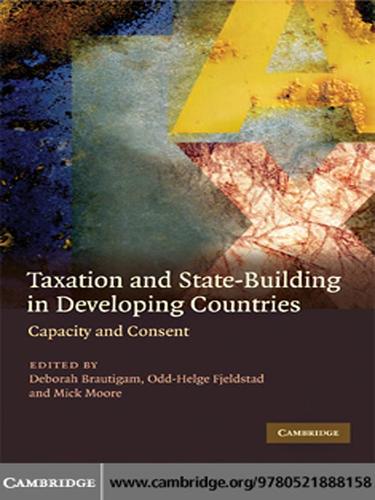
Taxation and State-Building in Developing Countries
0
0
As an Amazon Associate and affiliate partner, Menrva Books earns from qualifying purchases. Learn more
Author Description
There is a widespread concern that, in some parts of the world, governments are unable to exercise effective authority. When governments fail, more sinister forces thrive: warlords, arms smugglers, narcotics enterprises, kidnap gangs, terrorist networks, armed militias. Why do governments fail? This book explores an old idea that has returned to prominence: that authority, effectiveness, accountability and responsiveness is closely related to the ways in which governments are financed. It matters that governments tax their citizens rather than live from oil revenues and foreign aid, and it matters how they tax them. Taxation stimulates demands for representation, and an effective revenue authority is the central pillar of state capacity. Using case studies from Africa, Asia, Eastern Europe and Latin America, this book presents and evaluates these arguments, updates theories derived from European history in the light of conditions in contemporary poorer countries, and draws conclusions for policy-makers.
Menrva's Summary
THE THESIS
This book investigates the critical link between how governments finance themselves and their capacity to establish and maintain effective authority. It argues that the method of revenue generation—specifically, whether governments tax their citizens directly or rely on resource rents and foreign aid—profoundly impacts state effectiveness, accountability, and responsiveness. The book examines how taxation can foster demands for representation and build central pillars of state capacity, drawing on extensive case studies from diverse global regions to re-evaluate historical theories in contemporary developing country contexts.
THE SCOPE MAP
- What You Will Find:
- Analysis of the relationship between taxation and state-building in developing nations.
- Case studies from Africa, Asia, Eastern Europe, and Latin America.
- Evaluation of theories on state capacity derived from European history, applied to contemporary poorer countries.
- Discussion of the impact of different revenue sources (e.g., oil, aid vs. domestic taxation) on government effectiveness.
- Conclusions and policy recommendations for governments and international organizations.
THE AUTHORITY PERSPECTIVE
The book is recognized for its rigorous examination of the foundational role taxation plays in state development and governmental legitimacy. It is particularly noted for updating historical theories of state-building with empirical evidence from contemporary developing countries, offering a nuanced perspective on the challenges of effective governance. The comparative case studies provide a broad empirical base for its arguments, making it a valuable resource for scholars and policymakers interested in state capacity and development economics. Its conclusions offer practical insights into how revenue policies can be leveraged to strengthen state institutions and foster greater accountability.
Page Count:
304
Publication Date:
2008-01-01
ISBN-10:
0521888158
ISBN-13:
9780521888158
Politics
Non-Fiction
Economics
Public Administration
Community Tags
Similar Books