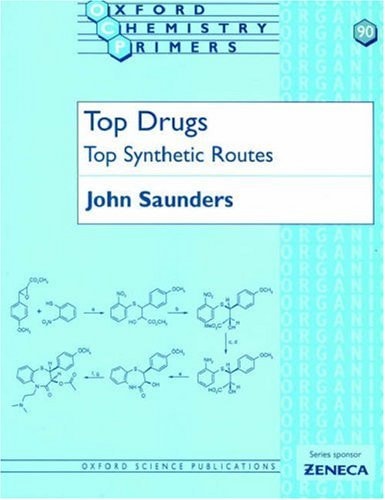
Top Drugs: Top Synthetic Routes
0
0
As an Amazon Associate and affiliate partner, Menrva Books earns from qualifying purchases. Learn more
Author Description
Today's top selling drugs have been uncovered from two major sources: natural products and laboratory synthesis. Those synthesised directly by medicinal chemists usually have been the result of a protracted discovery programme using a natural product (e.g. a hormone or an enzyme substrate) or a screening lead as a starting point. Many of the major categories of human disease cardiovascular, gastrointestinal, central nervous system, inflammatory and infectious diseases are included. After a short introduction to the discovery and mechanism of action of each drug, the syntheses of the best selling drugs are reviewed. Where the information exists in the literature, the original research method to each drug is compared with more recent approaches which aim either at improving the route or at validating newer methodologies or reagents in the context of drug synthesis. Since, for many drugs, the marketed product was originally prepared as a racemic mixture, perhaps the most important comparison is between that route and alternatives which involve some element of asymmetric synthesis.
Menrva's Summary
THE THESIS
This text investigates the chemical methodologies and synthetic pathways utilized in the production of the world's most commercially successful pharmaceutical agents. John Saunders, an expert in medicinal chemistry, provides a structured analysis of how laboratory synthesis transforms initial screening leads or natural product templates into viable, market-ready medications. The book evaluates the evolution of these synthetic routes, contrasting original research methods with contemporary advancements in chemical reagents and asymmetric synthesis techniques.
THE SCOPE MAP
What You Will Find
- Analysis of synthetic routes for drugs targeting cardiovascular, gastrointestinal, central nervous system, inflammatory, and infectious diseases.
- Comparative studies between original research synthesis and modern, optimized methodologies.
- Technical evaluation of racemic mixtures versus asymmetric synthesis approaches.
- Case-based reviews of drug discovery programs and mechanisms of action.
THE AUTHORITY PERSPECTIVE
Experts and students frequently cite this primer as a foundational resource for understanding the practical application of synthetic organic chemistry in the pharmaceutical industry. Readers note the technical density of the prose, which effectively bridges the gap between theoretical chemistry and industrial drug manufacturing.
Page Count:
96
Publication Date:
2012-07-12
Publisher:
Oxford University Press
ISBN-10:
0198501005
ISBN-13:
9780198501008
Science
textbook
Pharmacology
Chemistry
Community Tags
Similar Books