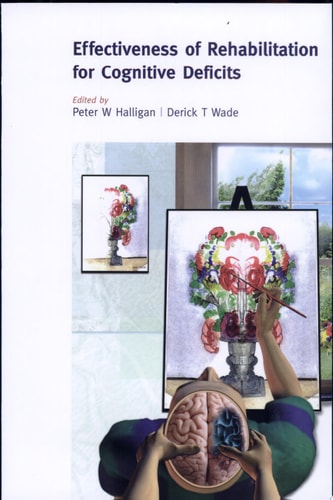
The Effectiveness of Rehabilitation for Cognitive Deficits
0
0
As an Amazon Associate and affiliate partner, Menrva Books earns from qualifying purchases. Learn more
Author Description
Cognitive rehabilitation has over the last decade grown to become an established and influential therapeutic approach. There is now a considerable body if knowledge describing the principles and theoretical basis for analyzing and directing treatments to selective cognitive deficits. Despite this, the clinical effectiveness and extent to which cognitive theory can inform therapeutic treatment has been questioned. In this book, some of the most influential clinicians and cognitive neuroscientists in the world critically review and discuss the effectiveness rehabilitation methods currently used to treat patients with cognitive impairments following acquired brain damage. It provides a much needed critique and consensus about what should constitute best practice.
Menrva's Summary
THE THESIS
This book investigates the clinical efficacy and theoretical validity of rehabilitation methods used to treat cognitive deficits resulting from acquired brain damage. Authors Derick T. Wade and Peter W. Halligan assemble a collection of contributions from leading clinicians and cognitive neuroscientists to evaluate the current state of therapeutic practice. The text synthesizes existing research to determine how cognitive theory translates into measurable patient outcomes and establishes a framework for identifying best practices in the field.
THE SCOPE MAP
What You Will Find
- Critical reviews of current rehabilitation methodologies for cognitive impairment.
- Analysis of the intersection between cognitive theory and clinical treatment application.
- Evidence-based assessments of treatment efficacy following acquired brain injury.
- Expert consensus on standardized best practices for neuro-rehabilitation.
THE AUTHORITY PERSPECTIVE
Experts identify this work as a significant resource for clinicians and researchers seeking to bridge the gap between theoretical neuroscience and practical patient care. Readers frequently note the academic rigor and the balanced critique provided by the contributors regarding the limitations of current therapeutic approaches.
Page Count:
416
Publication Date:
2005-11-17
Publisher:
Oxford University Press
ISBN-10:
0198526547
ISBN-13:
9780198526544
Psychology
Medicine
Neuroscience
Rehabilitation