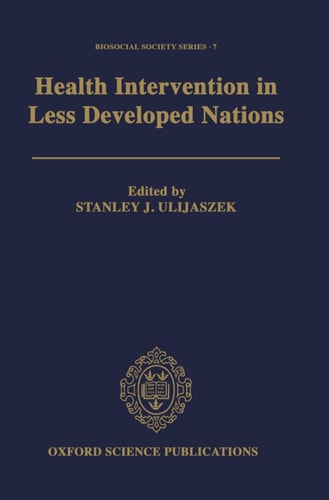
Health Intervention in Less Developed Nations
0
0
As an Amazon Associate and affiliate partner, Menrva Books earns from qualifying purchases. Learn more
Author Description
This is the first book to attempt a critical examination of the wider human implications of different types of health intervention on human groups and communities in the less developed world, drawing together material only otherwise available in policy documents and reports from international agencies. Issues include the relationship between economic factors, health interventions and health outcomes, the implementation of water and sanitation projects, health and immunization projects and their implications for human well- being. The questions of why expected outcomes are not always achieved, and why outcomes are often unpredictable, are also discussed. This is an important volume for those involved in the design and implementation of health intervention programs in the developing world, as well as students and researchers of development economics, primary health care, nutrition, and anthropology.
Menrva's Summary
THE THESIS
This volume investigates the complex relationship between health interventions and their actual outcomes within communities in less developed nations. Stanley J. Ulijaszek, an expert in human ecology and biological anthropology, synthesizes disparate policy documents and agency reports to evaluate why health programs frequently fail to meet their projected goals. The text provides a critical framework for understanding how economic, social, and biological factors intersect to influence the success or failure of international health initiatives.
THE SCOPE MAP
What You Will Find
- Analysis of the correlation between economic development and health intervention outcomes
- Evaluation of specific project types including water, sanitation, and immunization programs
- Examination of the unpredictable nature of health outcomes in diverse human populations
- Synthesis of policy data from international agencies regarding human well-being
THE AUTHORITY PERSPECTIVE
Experts recognize this volume as a foundational text for understanding the practical limitations of international health policy. Researchers and students in development studies frequently cite the work for its critical approach to the implementation of primary health care programs.
Page Count:
152
Publication Date:
1995-09-14
Publisher:
Oxford University Press
ISBN-10:
0198523025
ISBN-13:
9780198523024
Anthropology
Sociology
International Development
Public Health
Community Tags
Similar Books