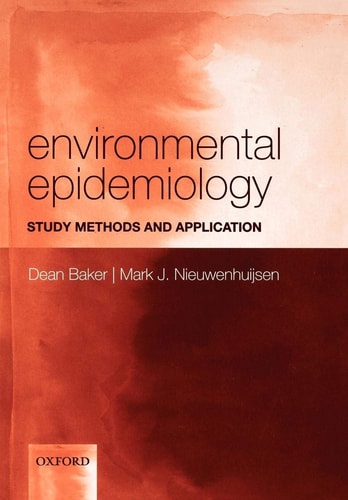
Environmental Epidemiology: Study Methods and Application
0
0
As an Amazon Associate and affiliate partner, Menrva Books earns from qualifying purchases. Learn more
Author Description
Air pollution, water contamination, persistent organic pollutants, pesticides, metals, and radiofrequencies are just some examples of environmental factors that have been linked to adverse health effects such as cancer, respiratory disease and reproductive problems. Environmental epidemiology studies the interaction of disease and these environmental determinants of disease at a population level. Whilst risks associated with environmental exposures are generally small, the exposed population, and hence the population burden of disease, may be large. To detect these small risks, it is therefore essential that related methods and their application are refined. In addition, there is increasing attention on environmental health issues from the public, government, and media, thus raising the profile of envrionmental epidemiology in preventive medicine.This book describes the methods of environmental epidemiology, with emphasis on good practice. It outlines the basic principles of epidemiology and environmental health, and describes in more detail special environmental epidemiological designs that are rarely described in other textbooks. The principles of health risk assessment and forecasting, as well as the application of study data in these types of study, are explored. Several chapters cover practical issues in the conduct of studies, such as field work and data analyses and its requirements. Ethical issues and the role of environmental epidemiology in policy making are also covered.
Menrva's Summary
THE THESIS
This book investigates the methodological rigor required to identify and quantify the health risks posed by environmental exposures at the population level. Authors Dean Baker and Mark J. Nieuwenhuijsen leverage their expertise in public health and environmental medicine to provide a comprehensive framework for conducting epidemiological research. The text bridges the gap between theoretical principles and practical application, emphasizing the necessity of precise study design to detect small-scale risks that carry significant public health burdens. By integrating technical methodology with policy considerations, the authors establish a standard for evaluating environmental determinants of disease.
THE SCOPE MAP
What You Will Find
- Methodological frameworks for environmental epidemiological study designs.
- Practical guidance on field work, data collection, and statistical analysis requirements.
- Analysis of health risk assessment, forecasting, and the translation of data into policy.
- Ethical considerations and the integration of environmental health into preventive medicine.
THE AUTHORITY PERSPECTIVE
Experts recognize this work as a specialized resource that addresses specific study designs often omitted from general epidemiological textbooks. Readers frequently note the technical density of the prose, making it a valuable reference for researchers and practitioners focused on environmental health policy and preventive medicine.
Page Count:
398
Publication Date:
2008-08-18
Publisher:
Oxford University Press
ISBN-10:
0198527926
ISBN-13:
9780198527923
Science
Epidemiology
Public Health
Medicine
Community Tags
Similar Books