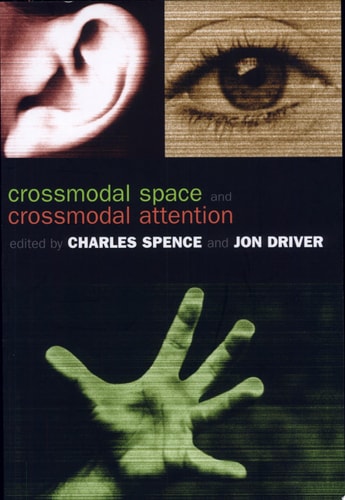
Crossmodal Space and Crossmodal Attention
0
0
As an Amazon Associate and affiliate partner, Menrva Books earns from qualifying purchases. Learn more
Author Description
Many organisms possess multiple sensory systems, such as vision, hearing, touch, smell, and taste. The possession of such multiple ways of sensing the world offers many benefits. These benefits arise not only because each modality can sense different aspects of the environment, but also because different senses can respond jointly to the same external object or event, thus enriching the overall experience-for example, looking at an individual while listening to them speak. However, combining the information from different senses also poses many challenges for the nervous system. In recent years, there has been dramatic progress in understanding how information from different sensory modalities gets integrated in order to construct useful representations of external space; and in how such multimodal representations constrain spatial attention. Such progress has involved numerous different disciplines, including neurophysiology, experimental psychology, neurological work with brain-damaged patients, neuroimaging studies, and computational modelling. This volume brings together the leading researchers from all these approaches, to present the first integrative overview of this central topic in cognitive neuroscience.
Menrva's Summary
THE THESIS
This volume investigates the mechanisms by which the nervous system integrates information from multiple sensory modalities to construct coherent representations of external space and direct spatial attention. The authors, Charles Spence and Jon Driver, curate a collection of research from leading experts in cognitive neuroscience. By synthesizing findings from neurophysiology, experimental psychology, and neuroimaging, the text provides a comprehensive framework for understanding how the brain manages multimodal inputs to navigate the environment.
THE SCOPE MAP
What You Will Find
- Analysis of sensory integration across vision, audition, touch, olfaction, and gustation.
- Examination of how multimodal representations influence spatial attention and behavioral responses.
- Synthesis of data from neuroimaging, computational modeling, and clinical studies of brain-damaged patients.
- Theoretical discussions on the challenges the nervous system faces when combining disparate sensory signals.
THE AUTHORITY PERSPECTIVE
Experts recognize this volume as a foundational interdisciplinary text that bridges the gap between sensory physiology and cognitive attention research. Readers frequently note the academic density of the prose, which serves as a primary resource for researchers and graduate students in the field of cognitive neuroscience.
Page Count:
344
Publication Date:
2004-06-10
Publisher:
Oxford University Press
ISBN-10:
0198524862
ISBN-13:
9780198524861
Science
Psychology
Cognitive Psychology
Neuroscience
Community Tags
Similar Books