Essentials of Logic Programming
0
0
As an Amazon Associate and affiliate partner, Menrva Books earns from qualifying purchases. Learn more
Author Description
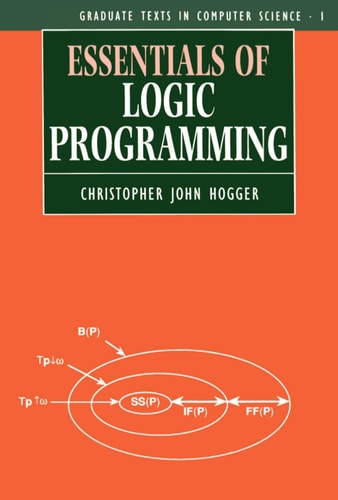
Logic programming has developed into a broad discipline within computing science, contributing to such fields as artificial intelligence, new-generation computing, software engineering and deductive databases. This new book presents the fundamentals of logic programming from both practical and theoretical viewpoints. It also covers various extensions of the formalism, its relationship to Prolog, its formal semantics and its applications to program analysis and transformation. The text is illustrated throughout with numerous diagrams. The material is organized into sixty modular themes, permitting many kinds of course to be based upon it; and it includes nearly seventy pages of detailed answers to all of the exercises.
Menrva's Summary
THE THESIS
This text investigates the foundational principles and practical applications of logic programming within the broader context of computer science. Christopher John Hogger provides a comprehensive overview that bridges the gap between theoretical formalisms and real-world implementation. By synthesizing academic research with practical programming techniques, the book establishes a framework for understanding how logic-based systems contribute to artificial intelligence, database management, and software engineering.
THE SCOPE MAP
What You Will Find
- Theoretical foundations of logic programming and formal semantics
- Practical implementation strategies and their relationship to the Prolog language
- Applications in program analysis and automated transformation
- Sixty modular themes supported by nearly seventy pages of detailed exercise solutions
THE AUTHORITY PERSPECTIVE
Experts recognize this work as a foundational text for graduate-level study in logic programming due to its modular structure and extensive problem sets. Readers frequently note the academic density of the prose, which serves as a rigorous introduction for students and researchers alike.
Page Count:
322
Publication Date:
1991-02-21
Publisher:
Clarendon Press
ISBN-10:
0198538324
ISBN-13:
9780198538325
Computer Science
Software Engineering
Programming
Community Tags
Other Editions(3)

Similar Books