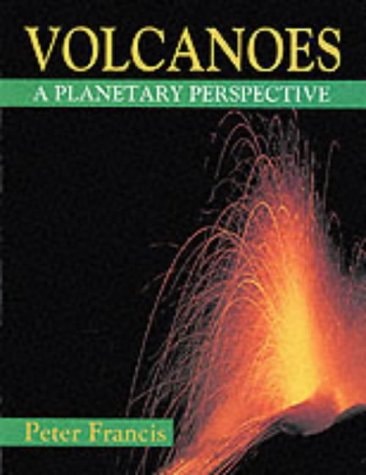
Volcanoes: A Planetary Perspective
0
0
As an Amazon Associate and affiliate partner, Menrva Books earns from qualifying purchases. Learn more
Author Description
Some of the greatest disasters in history were caused by volcanic eruptions. Apart from their immediate effects, which in some cases have altered the course of human civilization, large eruptions also have world-wide atmospheric effects, with implications for the global climate that are of increasing international concern. This book, gives a readable, straightforward account--much of it from first-hand experience--of the familiar violent aspects of volcanoes and the various forms that eruptions can take. The author also goes beyond the spectacular visible displays to explore why volcanoes exist, why they occur where they do, and how examples of major historical eruptions can be interpreted in terms of physical processes. Throughout he places volcanism in a planetary perspective, exploring the preeminent role of submarine volcanism on Earth and the stunning range of volcanic phenomena revealed by spacecraft exploration of the solar system. Students of geology, geography, and the environment, as well as the interested general reader, will find this richly illustrated book a stimulating source of expert information on one of nature's most dramatic phenomena.
Menrva's Summary
THE THESIS
This book investigates the fundamental physical processes driving volcanic activity and the significant impact these phenomena exert on both Earth's history and the broader solar system. Peter Francis, a respected volcanologist, utilizes his extensive field experience and geological data to explain why volcanoes form, how they erupt, and the long-term climatic consequences of major eruptions. The text bridges the gap between observable surface events and the underlying tectonic and planetary mechanisms that govern them.
THE SCOPE MAP
What You Will Find
- Analysis of historical volcanic disasters and their influence on human civilization
- Examination of global atmospheric effects and climate implications of large-scale eruptions
- Comparative study of terrestrial volcanism and volcanic activity observed on other planets
- Detailed explanation of submarine volcanism and its role in Earth's geological development
- Integration of physical process modeling with observational field data
THE AUTHORITY PERSPECTIVE
Experts and educators frequently cite this work as a foundational text for students of geology and geography due to its clear, accessible synthesis of complex volcanic phenomena. Readers often note that the book successfully balances technical geological rigor with a narrative style that remains engaging for the general public.
Page Count:
456
Publication Date:
1993-07-29
Publisher:
Oxford University Press
ISBN-10:
0198540337
ISBN-13:
9780198540335
Science
Volcanology
Geography
Volcanoes
Planetary Science
Geology
Earth Science
Community Tags
Similar Books