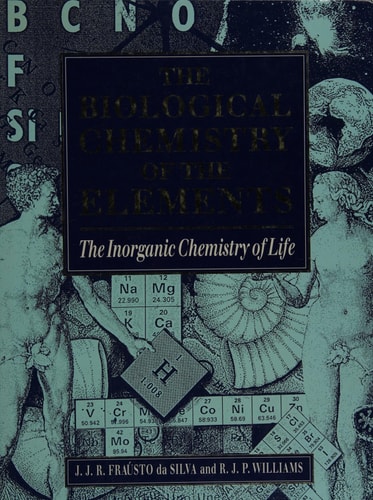
The Biological Chemistry of the Elements: The Inorganic Chemistry of Life
0
0
As an Amazon Associate and affiliate partner, Menrva Books earns from qualifying purchases. Learn more
Author Description
The study of the chemistry of living processes has traditionally centered on the behavior of organic compounds in water; together they account for 99 per-cent of the matter in living systems. However, we also know that about 20 "inorganic" elements are also essential for life, and that they are found in similar amounts in most living systems. This book's objective is to examine and explain the importance of these elements. The authors begin with a survey of the chemical and physical factors controlling the elements of life. The essential functions of individual inorganic elements are then detailed. A final section consolidates a major theme of the book -- the cooperative interaction of elements in living systems. These chapters discuss the relationships between chemical activity and morphology and the effect that changes in the availability of elements have on life -- not only in providing evolutionary pressures but also in the context of the use of medicines and the spread of pollutants. This major graduate-level chemistry text provides a completely new way of looking at the chemistry of living processes. It is essential reading for all scientists interested in bioinorganic chemistry, including biologists, biochemists, chemists and physicists.
Menrva's Summary
THE THESIS
This text investigates the essential role of inorganic elements in biological systems and how their chemical properties dictate the morphology and function of living organisms. Authors J. J. R. Fraústo da Silva and R. J. P. Williams, both distinguished researchers in the field of bioinorganic chemistry, synthesize chemical and physical data to explain why approximately 20 inorganic elements are vital to life. The book establishes a framework that moves beyond traditional organic-centric biology to demonstrate how these elements interact cooperatively within living systems. By analyzing the availability of these elements, the authors provide a comprehensive model for understanding evolutionary pressures, the mechanism of medicinal compounds, and the environmental impact of pollutants.
THE SCOPE MAP
What You Will Find
- A survey of chemical and physical factors governing the behavior of inorganic elements in biological environments.
- Detailed analysis of the specific functions performed by individual essential inorganic elements.
- Examination of the cooperative interactions between elements and their influence on biological morphology.
- Discussion on the impact of elemental availability regarding evolutionary development, pharmacology, and environmental toxicology.
THE AUTHORITY PERSPECTIVE
Experts and academics recognize this work as a foundational text for advanced study in bioinorganic chemistry. Readers frequently note the high level of academic density and the sophisticated interdisciplinary approach required to fully grasp the authors' arguments.
Page Count:
582
Publication Date:
1991-10-24
Publisher:
Oxford University Press
ISBN-10:
0198555989
ISBN-13:
9780198555988
Science
Biochemistry
Bioinorganic Chemistry
Biology
Chemistry inorganic
Inorganic Chemistry
Chemistry
Community Tags
Similar Books