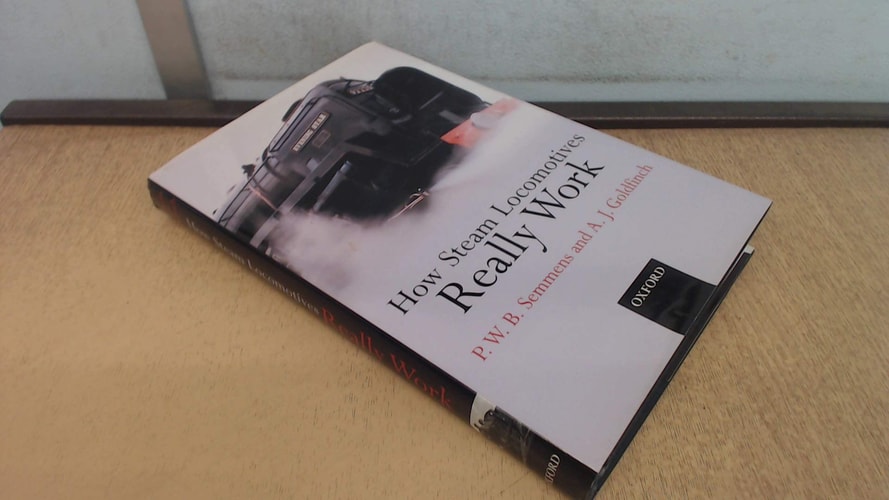
How Steam Locomotives Really Work
0
0
As an Amazon Associate and affiliate partner, Menrva Books earns from qualifying purchases. Learn more
Author Description
Steam locomotives were developed in the early part of the 19th Century, initially by Trevithick, and then most successfully by George Stephenson, whose engine Locomotion inaugurated the famous Stockton and Darlington Railway in 1825. For the next 150 years, steam locomotives were further developed and refined, until the advent of new electrical technology superseded them. Although British Railways operated its last main-line steam locomotives in 1968, there is still immense interest in the large numbers of locomotives that have been privately preserved, and which run on heritage railways and in various parts of the world. This book describes the anatomy and physiology of the steam train, to enable all train enthusiasts to understand the workings of the various types of engines in use. It covers the design of the engine, the process of converting fuel into mechanical tractive effort to haul passenger and freight trains, and the function and design of the various components of the engine. The authors also outline the reasons behind the safe and efficient operation and maintenance of steam locomotives. Although the steam locomotive originated in the UK, there were parallel lines of development in North America and in various other European countries, many of which introduced their own individual features. These are dealt with in the book, which will appeal to railway enthusiasts throughout the world.
Menrva's Summary
THE THESIS
This book investigates the mechanical principles and operational requirements that allowed steam locomotives to function as the primary mode of rail transport for over a century. The authors, A. J. Goldfinch and P. W. B. Semmens, utilize their technical expertise to break down the complex anatomy of steam engines into accessible concepts. By examining the transition from early 19th-century designs to the final refinements before electrification, they provide a comprehensive framework for understanding how thermal energy is converted into mechanical tractive effort.
THE SCOPE MAP
What You Will Find
- Detailed analysis of steam engine components and their specific functions
- Explanations of the thermodynamic processes involved in fuel combustion and power generation
- Comparative studies of locomotive design evolution across the United Kingdom, North America, and Europe
- Operational and maintenance protocols required for the safe handling of steam-powered machinery
THE AUTHORITY PERSPECTIVE
Railway enthusiasts and historians frequently cite this work as a foundational technical reference for understanding the mechanics of steam traction. Experts highlight the clarity of the authors' explanations, noting that the text successfully bridges the gap between casual interest and engineering-level detail.
Page Count:
360
Publication Date:
2000-10-19
Publisher:
Oxford University Press
ISBN-10:
0198565364
ISBN-13:
9780198565369
History
Technology
Trains
Transportation
Engineering
Locomotives
Community Tags
Similar Books