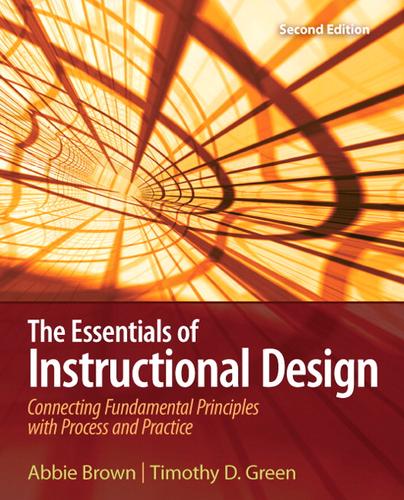
The Essentials of Instructional Design
0
0
As an Amazon Associate and affiliate partner, Menrva Books earns from qualifying purchases. Learn more
Author Description
The Essentials of Instructional Design: Connecting Fundamental Principles with Process and Practice is designed to introduce the essential elements of instructional design (ID) to students who are new to ID. The key procedures within the ID process, learner analysis, task analysis, needs analysis, developing goals and objectives, organizing instruction, developing instructional activities, assessing learner achievement and evaluating the success of the instructional design are covered in complete chapters that introduce and describe the procedure, with examples of how the procedure is accomplished using the best known instructional design models (e.g. Dick and Carey; Morrison, Ross and Kemp...etc.). Unlike most other ID books, this book provides an overview of the principles and practice of ID without placing emphasis on any one ID model. Offering the voice of instructional designers from a number of professional settings and providing real-life examples from instructional designers, students learn how professional organizations put the various ID processes into practice. The book's first chapter describes the history of instructional design and how it relates to more traditional approaches to teaching; the second chapter provides an overview of what is known about learning and cognition. The end chapters explain the instructional media production process and visual design for instructional media. This text provides students with the information they need to make informed decisions as they design and develop instruction, offering them a variety of possible approaches for each step in the ID process and explaining the strengths and challenges associated with each approach. - Publisher.
Menrva's Summary
THE THESIS
This book introduces the fundamental principles and practical processes of instructional design for new students. It covers key procedures such as learner analysis, task analysis, needs analysis, developing goals and objectives, organizing instruction, developing instructional activities, assessing learner achievement, and evaluating instructional design success, illustrating these with examples from established models like Dick and Carey, and Morrison, Ross, and Kemp. The text uniquely offers an overview of instructional design principles and practice without prioritizing a single model, incorporating insights and real-life examples from instructional designers across various professional settings to demonstrate practical application. It also includes foundational chapters on the history of instructional design and learning/cognition, concluding with discussions on instructional media production and visual design for instructional media.
THE SCOPE MAP
- Coverage of essential instructional design (ID) procedures: learner analysis, task analysis, needs analysis, goal and objective development, instruction organization, activity development, achievement assessment, and evaluation.
- Examples of procedure accomplishment using well-known ID models such as Dick and Carey, and Morrison, Ross, and Kemp.
- An overview of ID principles and practice that does not emphasize any single ID model.
- Voices and real-life examples from instructional designers in diverse professional settings.
- A chapter on the history of instructional design and its relation to traditional teaching approaches.
- A chapter providing an overview of learning and cognition.
- End chapters detailing the instructional media production process and visual design for instructional media.
THE AUTHORITY PERSPECTIVE
The book is structured to provide students new to instructional design with a comprehensive introduction to its essential elements and processes. It aims to equip readers with the knowledge needed to make informed decisions in designing and developing instruction by presenting a variety of approaches for each step and discussing their respective strengths and challenges. The inclusion of diverse professional perspectives and real-life examples grounds the theoretical concepts in practical application, suggesting a focus on bridging fundamental principles with actual practice. The text's approach of offering an overview without privileging one model encourages a broad understanding of the field.
Page Count:
216
Publication Date:
2011-01-01
ISBN-10:
0135084229
ISBN-13:
9780135084229
Non-Fiction
Self-help
Professional Development
Instructional Design
Education
Learning Theory
Community Tags
Similar Books