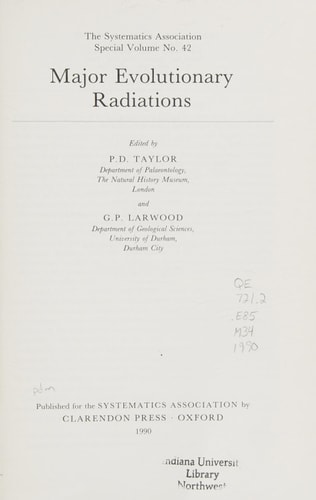
Major Evolutionary Radiations
0
0
As an Amazon Associate and affiliate partner, Menrva Books earns from qualifying purchases. Learn more
Author Description
This unique volume takes a close look at patterns of evolutionary change responsible for the astounding diversity of life and the major radiations seen in many taxonomic groups. Evidence from the fossil record shows that this process has not occurred at an even rate. Rather, relatively short but highly active periods of evolution have yielded the multiplication of species and morphological divergences, such as the emergence of flowering plants during the late Cretaceous. The contributors to this work, all recognized authorities in their fields, discuss general aspects of major radiations, and then focus on evolution in taxonomic groups with ample fossil records. The book is an important complement to the literature of extinction and paleontology, and will be read with interest by paleontologists and evolutionary biologists alike.
Menrva's Summary
THE THESIS
This volume investigates the mechanisms and patterns of major evolutionary radiations that have shaped the biological diversity observed in the fossil record. Edited by Gilbert P. Larwood and Paul D. Taylor, the text compiles research from recognized authorities in paleontology and evolutionary biology. The contributors analyze why evolutionary change does not occur at a constant rate, instead focusing on brief, high-intensity periods of speciation and morphological divergence.
THE SCOPE MAP
What You Will Find
- Analysis of evolutionary patterns within specific taxonomic groups with extensive fossil records
- Examination of the non-linear nature of evolutionary change over geological time
- Case studies on significant biological events, such as the emergence of flowering plants during the late Cretaceous
- Theoretical frameworks regarding the drivers of rapid species multiplication and morphological innovation
THE AUTHORITY PERSPECTIVE
Experts recognize this volume as a specialized resource for paleontologists and evolutionary biologists interested in the mechanics of macroevolution. Readers frequently note the academic density of the prose and the technical nature of the contributions provided by the field specialists.
Page Count:
456
Publication Date:
1991-03-28
Publisher:
Clarendon Press
ISBN-10:
0198577184
ISBN-13:
9780198577188
Science
Natural History
Radiation
Paleontology
Evolutionary Biology
Biology
Community Tags
Similar Books