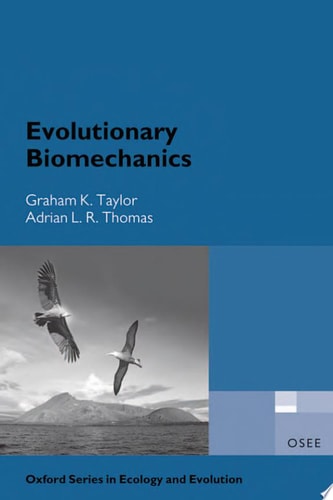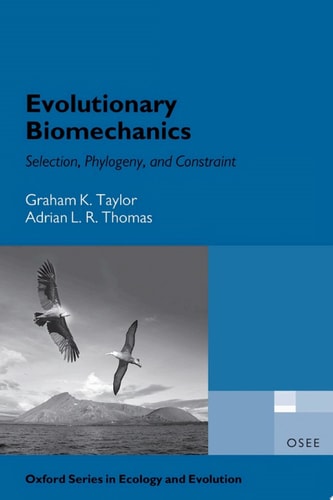
Evolutionary Biomechanics: Selection, Phylogeny, and Constraint
0
0
As an Amazon Associate and affiliate partner, Menrva Books earns from qualifying purchases. Learn more
Author Description
Evolutionary biomechanics is the study of evolution through the analysis of biomechanical systems. Its unique advantage is the precision with which physical constraints and performance can be predicted from first principles. Instead of reviewing the entire breadth of the biomechanical literature, a few key examples are explored in depth as vehicles for discussing fundamental concepts, analytical techniques, and evolutionary theory. Each chapter develops a conceptual theme, developing the underlying theory and techniques required for analyses in evolutionary biomechanics. Examples from terrestrial biomechanics, metabolic scaling, and bird flight are used to analyse how physics constrains the design space that natural selection is free to explore, and how adaptive evolution finds solutions to the trade-offs between multiple complex conflicting performance objectives. Evolutionary Biomechanics is suitable for graduate level students and professional researchers in the fields of biomechanics, physiology, evolutionary biology and palaeontology. It will also be of relevance and use to researchers in the physical sciences and engineering.
Menrva's Summary
THE THESIS
This book investigates how physical constraints and performance metrics dictate the pathways of evolutionary adaptation. Authors Adrian M. K. Thomas and Graham D. Taylor provide a framework for integrating biomechanical analysis with evolutionary theory, arguing that physical laws define the boundaries within which natural selection operates. By focusing on specific case studies rather than broad literature reviews, the text establishes a rigorous methodology for predicting biological design outcomes from first principles.
THE SCOPE MAP
What You Will Find
- Analysis of terrestrial biomechanics and metabolic scaling
- Examination of bird flight mechanics
- Theoretical frameworks for evaluating trade-offs in complex performance objectives
- Mathematical and physical modeling techniques for evolutionary study
Scope Limits
- Does not provide an exhaustive survey of all biomechanical literature
- Focuses on selected case studies rather than a comprehensive taxonomic overview
THE AUTHORITY PERSPECTIVE
Experts identify this text as a specialized resource for graduate students and researchers working at the intersection of physics and biology. Readers frequently note the technical density of the prose, which requires a strong background in quantitative analysis to fully utilize the presented methodologies.
Page Count:
176
Publication Date:
2014-01-01
Publisher:
OUP Oxford
ISBN-10:
0191009288
ISBN-13:
9780191009280
Science
Physiology
Evolutionary Biology
Evolution
Paleontology
Biology
Biomechanics
Community Tags
Similar Books