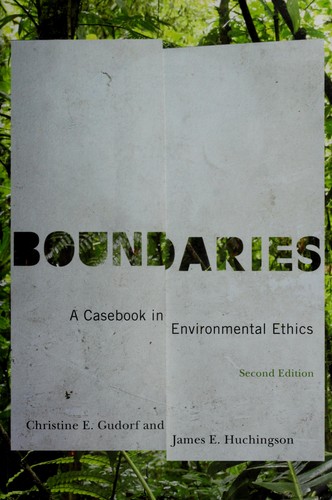
Boundaries
0
0
As an Amazon Associate and affiliate partner, Menrva Books earns from qualifying purchases. Learn more
Author Description
If we are part of the environment, and we are, what are the limits, the boundaries, of human intervention in the environment? Environmental ethics involves virtually all other existing areas of ethics and the authors set out to explore the line that separates the current state of the environment from what it should be in the future, along the way systematically investigating the crucial and prevailing issues of technology, business, medicine, and bioethics. Beginning with an outstanding overview of the field, they highlight key developments and schools of thought in the environmentalist movement, then proceed to lay out a series of cases on such topics as: preservation of the Everglades; use of pesticides in developing countries; preserving ecosystems in Madagascar; the battle over deforestation in Java; disposing of nuclear waste in Nevada; the human cost of restoring coral reefs in Indonesia; the impact of hydropower via U.S. rivers; desertification in China; restoring degraded ecosystems in Nebraska; the legitimacy of genetically modified foods; hunting and the human presence in nature; and xenotransplantation (implantations of living cells from other species). This book is a case-study textbook on environmental ethics, and its analysis is accessible, open and inclusive, inviting the reader to participate in applying existing theory in environmental ethics, testing and correcting it in real situations, and devising new theory that contributes to the growth and maturity of this developing field on which the health and welfare of the world environment depend. The case studies in this volume bring into sharp focus a clearer understanding of the human place in the environment, and an understanding of the environment that should guide both public policy and individual lifestyle decisions, bringing new urgency to the task of sustaining the biosphere.
Menrva's Summary
THE THESIS
The central question of this book is the extent and ethical justification of human intervention in the natural environment. The authors, Christine E. Gudorf and James E. Hansen, explore the boundaries between the current state of the environment and its desired future state, drawing on extensive case studies. They systematically investigate prevailing issues in technology, business, medicine, and bioethics, highlighting key developments and schools of thought within environmental ethics. The book aims to foster an understanding that guides public policy and individual decisions for biosphere sustainability.
THE SCOPE MAP
- Overview of the field of environmental ethics and its key developments.
- Case study: Preservation of the Everglades.
- Case study: Use of pesticides in developing countries.
- Case study: Deforestation in Java and nuclear waste disposal in Nevada.
- Case study: Human cost of restoring coral reefs and impact of hydropower.
- Case study: Desertification in China and restoring degraded ecosystems.
- Analysis of genetically modified foods, hunting, and xenotransplantation.
- Application of existing theory to real-world situations and development of new theory.
THE AUTHORITY PERSPECTIVE
This book is presented as a case-study textbook designed to be accessible, open, and inclusive, inviting readers to actively participate in applying and testing environmental ethics theory. The analysis aims to bring a clearer understanding of the human place in the environment and inform both public policy and individual lifestyle decisions. By examining a wide array of pressing environmental issues through detailed case studies, the authors seek to underscore the urgency of sustaining the global biosphere. The book's approach encourages the development of new theoretical frameworks to mature this critical field.
Page Count:
315
Publication Date:
2010-01-01
ISBN-10:
158901636X
ISBN-13:
9781589016361
Non-Fiction
Philosophy
Science
Business Ethics
Bioethics
Case studies
Public Policy
Technology
Community Tags
Similar Books