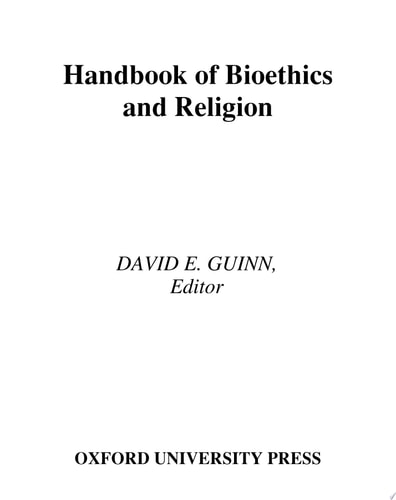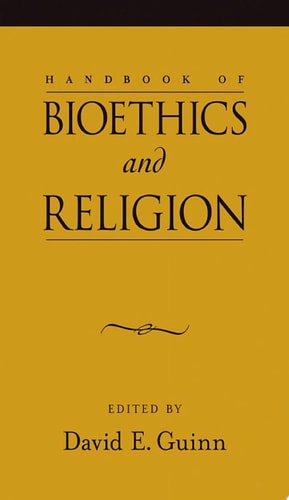
Handbook of Bioethics and Religion
0
0
As an Amazon Associate and affiliate partner, Menrva Books earns from qualifying purchases. Learn more
Author Description
What role should religion play in a religiously pluralistic liberal society? Public bioethics unavoidably raises this question in a particularly insistent fashion. As the 20 papers in this collection demonstrate, the issues are complex and multifaceted. The authors address specific and highly contested issues as assisted suicide, stem cell research, cloning, reproductive health, and alternative medicine as well as more general questions such as who legitimately speaks for religion in public bioethics, what religion can add to our understanding of justice, and the value of faith-based contributions to healthcare. Christian (Catholic and Protestant), Jewish, Islamic, and Buddhist viewpoints are represented. The first book to focus on the interface of religion and bioethics, this collection fills a significant void in the literature.
Menrva's Summary
THE THESIS
This collection investigates the appropriate role of religious perspectives within the framework of a pluralistic, liberal society, specifically concerning public bioethical discourse. Editor David E. Guinn compiles twenty scholarly papers that examine how faith-based values interact with secular policy, arguing that religious contributions offer unique insights into justice and healthcare that remain essential to comprehensive ethical debate.
THE SCOPE MAP
What You Will Find
- Analysis of contested bioethical topics including assisted suicide, stem cell research, and cloning.
- Comparative perspectives from Christian, Jewish, Islamic, and Buddhist traditions.
- Theoretical frameworks regarding the legitimacy of religious voices in public policy.
Scope Limits
- The text does not provide a singular consensus or unified ethical doctrine.
- It does not offer practical clinical guidelines for individual medical practitioners.
THE AUTHORITY PERSPECTIVE
Experts identify this collection as a foundational text for understanding the intersection of theology and medical ethics. Readers frequently note the academic density of the prose, which serves as a primary resource for scholars and students of public policy.
Page Count:
428
Publication Date:
2006-01-01
Publisher:
Oxford University Press
ISBN-10:
0190292466
ISBN-13:
9780190292461
Philosophy
Religion
Bioethics
Healthcare Ethics
Religious Aspects
Special Topics
Business Ethics
Sociology
Public Policy
Medical Ethics