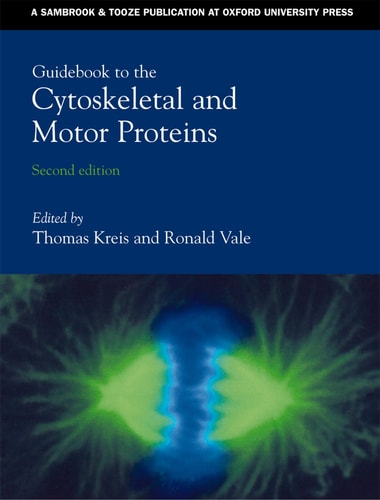
Guidebook to the Cytoskeletal and Motor Proteins
0
0
As an Amazon Associate and affiliate partner, Menrva Books earns from qualifying purchases. Learn more
Author Description
Since the first edition of Guidebook to Cytoskeletal and Motor Proteins, many new and important discoveries have been made on the structure and function of proteins involved in the microfilament, microtubule and intermediate filament systems in cells. This book collects much of the recent information on this diverse range of eukaryotic proteins, their genes, and the roles they play in cell structure, motor function, and signaling. Like other guidebooks in this series, this volume provides precise and up-to-date information on an important class of biological molecules, enabling both newcomers and specialists to gain access to unfamiliar work. The book begins with a comprehensive look at the structure and function of cytoskeletal actin, tubulin, and intermediate filaments and their associated proteins and continues with coverage of proteins that are involved in new filament systems. A section on molecular motors and associated proteins details all that is currently known about the major motor protein families and associated proteins in the motor complex. As well, a section on organelle structural proteins carefully describes the roles these proteins have in efficient intracellular communication and function. This book is perfect for graduate students and researchers in biochemistry, cell biology and biomedical sciences and will prove itself a useful tool to nonprofessionals interested in molecular biology.
Menrva's Summary
THE THESIS
This volume investigates the complex structural and functional roles of cytoskeletal and motor proteins within eukaryotic cells. Authors Ronald D. Vale and Thomas E. Kreis synthesize extensive research regarding microfilament, microtubule, and intermediate filament systems. The text serves as a comprehensive reference, organizing data on protein genes, motor functions, and signaling pathways to provide a structured overview for both academic specialists and students.
THE SCOPE MAP
What You Will Find
- Detailed structural analysis of actin, tubulin, and intermediate filaments.
- Comprehensive documentation of major motor protein families and their associated complexes.
- Examination of organelle structural proteins and their role in intracellular communication.
- Technical data on protein genes and their biological functions within eukaryotic cells.
THE AUTHORITY PERSPECTIVE
Experts and researchers frequently utilize this text as a foundational reference for understanding the mechanics of cellular architecture. The prose is noted for its technical density and precision, making it a standard resource for graduate-level study in biochemistry and cell biology.
Page Count:
551
Publication Date:
1999-09-15
Publisher:
Sambrook and Tooze Publications
ISBN-10:
0198599560
ISBN-13:
9780198599562
Science
Cytoskeleton
Biology
Reference
Biochemistry
Cell Biology
Community Tags
Other Editions(2)

Similar Books