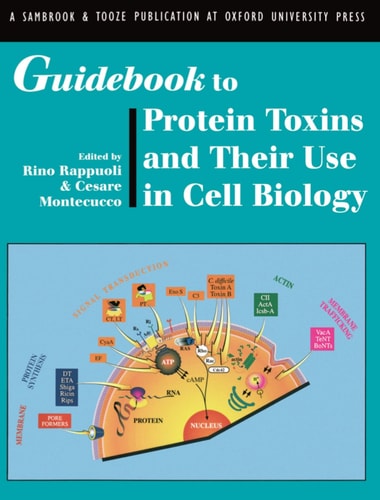
Guidebook to Protein Toxins and Their Use in Cell Biology
0
0
As an Amazon Associate and affiliate partner, Menrva Books earns from qualifying purchases. Learn more
Author Description
Many bacteria, animals, and plants produce toxins that can prove lethal to other organisms. Toxins are a form of "biological warfare" that helps their producer to survive and so confer an evolutionary advantage. They display an extraordinary range of complexity, from the formic acid provided by ants to bacterial proteins composed of thousands of amino acids. This Guidebook considers the more complex protein and peptide toxins and groups them according to their mode of action. Topics covered include: membrane-permeabilizing toxins; toxins affecting signal transduction and protein synthesis; cytoskeleton-affecting toxins; toxins affecting the immune and inflammatory response. This class of biomolecules will be of interest to a wide range of researchers in cell biology, neuroscience, and toxicology.
Menrva's Summary
THE THESIS
This guidebook investigates the diverse mechanisms by which complex protein and peptide toxins function as biological agents of survival and evolutionary advantage. Authors Cesare Montecucco and Rino Rappuoli provide a structured analysis of these biomolecules, categorizing them by their specific modes of action within host organisms. The text serves as a technical reference for researchers seeking to understand how these toxins interact with cellular processes to disrupt normal biological function.
THE SCOPE MAP
What You Will Find
- Classification of protein and peptide toxins based on their specific modes of action
- Analysis of membrane-permeabilizing toxins and their impact on cellular integrity
- Examination of toxins that interfere with signal transduction and protein synthesis
- Review of toxins affecting the cytoskeleton and the immune and inflammatory response
THE AUTHORITY PERSPECTIVE
Experts and researchers in the fields of cell biology and toxicology view this volume as a foundational reference for understanding the biochemical complexity of protein toxins. The text is noted for its clear categorization and technical utility for those studying the intersection of biological warfare and cellular physiology.
Page Count:
278
Publication Date:
1997-07-31
Publisher:
Sambrook and Tooze Publications
ISBN-10:
0198599544
ISBN-13:
9780198599548
Science
Cell Biology
Toxicology
Neuroscience
Biochemistry
Biology
Toxins
Community Tags
Similar Books