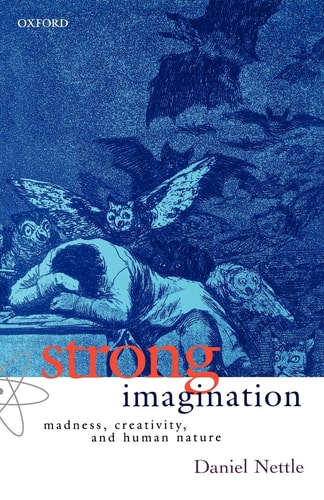
Strong Imagination
0
0
As an Amazon Associate and affiliate partner, Menrva Books earns from qualifying purchases. Learn more
Author Description
Madness is the central mystery of the human psyche. Our minds evolved to give us a faithful understanding of reality, to allow us to integrate into our communities, and to help us to adapt our behaviour to our environment. Yet in serious mental illness, the mind does exactly the opposite of these things. The sufferer builds castles of imaginative delusion, fails to adapt, and becomes a stranger among their own people. Mental illness is no marginal phenomenon: it is found in all societies and all historical epochs, and the genes that underlie it are quite common. Furthermore, the traits that identify the madman are found in attenuated form in normal thinking and feeling. The persistence of madness, then, is a terrible puzzle from both an evolutionary and a human point of view. In A Midsummer Night's Dream, Shakespeare suggested a link between madness and artistic creativity: 'The lunatic, the lover, and the poet', he wrote, 'Are of imagination all compact'. Recent studies have shown that there is indeed a connection. Rates of mental illness are hugely elevated in the families of poets, writers, and artists, suggesting that the same genes, the same temperaments, and the same imaginative capacities are at work in insanity and in creative ability. Thus the reason madness continues to exist is that the traits behind it have psychological benefits as well as psychological costs. In Strong Imagination, Daniel Nettle explores the nature of mental illness, the biological mechanisms that underlie it, and its link to creative genius. He goes on to consider the place of both madness and creative imagination in the evolution of our species.
Menrva's Summary
THE THESIS
This book investigates the evolutionary paradox of why genes associated with serious mental illness persist in the human population despite their clear psychological costs. Daniel Nettle, a researcher in the behavioral sciences, utilizes a synthesis of evolutionary biology, genetics, and psychological research to argue that the traits underlying madness are inextricably linked to the capacities for creative genius. By examining the spectrum between normal cognition and clinical pathology, the author posits that the same imaginative mechanisms that drive artistic achievement also underpin the development of delusional states.
THE SCOPE MAP
What You Will Find
- An analysis of the evolutionary trade-offs between creative imagination and mental illness.
- A review of empirical studies linking elevated rates of psychiatric conditions in the families of artists and writers.
- An exploration of the biological and genetic mechanisms that contribute to both creative temperaments and psychological disorders.
- A discussion on the historical and cross-cultural prevalence of mental illness as a non-marginal human phenomenon.
THE AUTHORITY PERSPECTIVE
Experts and readers frequently cite this work as a balanced, accessible entry point into the evolutionary psychology of mental health. The text is noted for its ability to bridge complex biological concepts with literary and historical examples, making it a valuable resource for those interested in the intersection of creativity and pathology.
Page Count:
248
Publication Date:
2002-03-07
Publisher:
Oxford
ISBN-10:
0198605005
ISBN-13:
9780198605003
Science
Self-help
Psychology
Evolution
Mental Illness
Personal Transformation
Counseling Psychology
Evolutionary Biology
Mental Health
Pathologies
Creativity
Physiological Aspects
Creativity & Genius
Community Tags
Similar Books