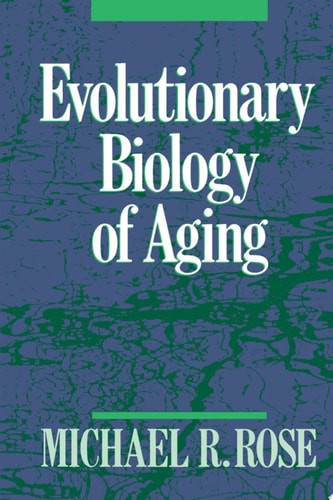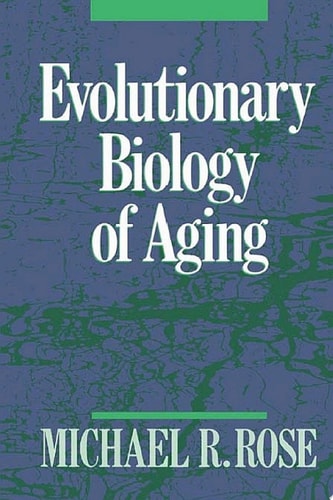
Evolutionary Biology of Aging
0
0
As an Amazon Associate and affiliate partner, Menrva Books earns from qualifying purchases. Learn more
Author Description
This unique book looks at the biology of aging from a fundamentally new perspective, one based on evolutionary theory rather than traditional concepts which emphasize molecular and cellular processes. The basis for this approach lies in the fact that natural selection, as a powerful determining force, tends to decline in importance with age. Many of the characteristics we associate with aging, the author argues, are more the result of this decline than any mechanical imperative contained within organic structures. This theory in turn yields the most fruitful avenues for seeking answers to the problem of aging, and should be recognized as the intellectual core of gerontology and the foundation for future research. The author ably surveys the vast literature on aging, presenting mathematical, experimental, and comparative findings to illustrate and support the central thesis. The result is the first complete synthesis of this vital field. Evolutionary biologists, gerontologists, and all those concerned with the science of aging will find it a stimulating, strongly argued account.
Menrva's Summary
THE THESIS
This book investigates the biological mechanisms of aging by shifting the focus from molecular and cellular decay to the decline of natural selection's influence over an organism's lifespan. Michael R. Rose, an expert in evolutionary biology, utilizes a framework rooted in population genetics and evolutionary theory to argue that senescence is a byproduct of the waning efficacy of natural selection in later life. By synthesizing mathematical models and comparative biological data, the author challenges traditional gerontological paradigms that view aging primarily as a mechanical failure of organic structures.
THE SCOPE MAP
What You Will Find
- Evolutionary theory applied to senescence and life history traits
- Mathematical models of natural selection decline
- Comparative biological data across various species
- Synthesis of experimental findings in gerontology
Scope Limits
- Does not focus on clinical or medical interventions for human longevity
- Does not provide a detailed analysis of specific molecular pathways or cellular repair mechanisms
THE AUTHORITY PERSPECTIVE
Experts recognize this work as a foundational text that successfully integrated evolutionary principles into the study of aging. Readers frequently note the academic density of the prose, which requires a solid background in biology to fully grasp the mathematical and theoretical arguments presented.
Page Count:
227
Publication Date:
1994-01-01
Publisher:
Oxford University Press
ISBN-10:
0190282576
ISBN-13:
9780190282578
Science
Evolution
Biology
Academic
Gerontology
Evolutionary Biology