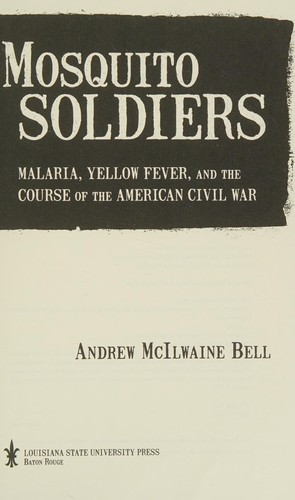
Mosquito Soldiers
0
0
As an Amazon Associate and affiliate partner, Menrva Books earns from qualifying purchases. Learn more
Author Description
Of the 620,000 soldiers who perished during the American Civil War, the overwhelming majority died not from gunshot wounds or saber cuts, but from disease. In this ground-breaking medical history, Andrew McIlwaine Bell explores the impact of two terrifying mosquito-borne maladies--malaria and yellow fever--on the major political and military events of the 1860s, revealing how deadly microorganisms carried by a tiny insect helped shape the course of the Civil War.
Menrva's Summary
THE THESIS
The Civil War's deadliest enemy was not the opposing army, but the microscopic organisms carried by mosquitoes. Andrew McIlwaine Bell's medical history examines the profound impact of malaria and yellow fever on the major political and military events of the 1860s. The book reveals how these mosquito-borne diseases, rather than battlefield injuries, were responsible for the vast majority of the 620,000 soldier deaths. Bell argues that these deadly microorganisms significantly shaped the ultimate course of the Civil War.
THE SCOPE MAP
- Analysis of malaria and yellow fever as primary causes of death during the Civil War.
- Exploration of the political and military ramifications of widespread disease outbreaks.
- Examination of how insect-borne pathogens influenced key events and decisions.
- Discussion of the scale of mortality from disease versus combat.
- Historical context of medical understanding and treatment during the 1860s.
THE AUTHORITY PERSPECTIVE
This medical history is recognized for its detailed examination of disease's role in the Civil War. The work highlights how mosquito-borne illnesses like malaria and yellow fever were more devastating than battlefield casualties. Bell's research underscores the significant, often overlooked, impact of these diseases on the war's progression and outcome. The book provides a critical perspective on the factors that shaped the conflict.
Page Count:
192
Publication Date:
2010-01-01
ISBN-10:
0807135615
ISBN-13:
9780807135617
History
Health
Non-Fiction
Insects
MEDICAL History
Disease
Community Tags
Similar Books