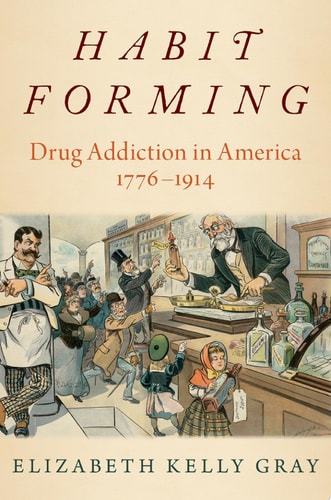
Habit Forming: Drug Addiction in America, 1776-1914
0
0
As an Amazon Associate and affiliate partner, Menrva Books earns from qualifying purchases. Learn more
Author Description
Habitual drug use in the United States is at least as old as the nation itself. Habit Forming traces the history of unregulated drug use and dependency before 1914, when the Harrison Narcotic Tax Act limited sales of opiates and cocaine under US law. Many Americans used opiates and other drugs medically and became addicted. Some tried Hasheesh Candy, injected morphine, or visited opium dens, but neither use nor addiction was linked to crime, due to the dearth of restrictive laws. After the Civil War, American presses published extensively about domestic addiction. Later in the nineteenth century, many used cocaine and heroin as medicine. As addiction became a major public health issue, commentators typically sympathized with white, middle-class drug users, while criticizing such use by poor or working-class people and people of color. When habituation was associated with middle-class morphine users, few advocated for restricted drug access. By the 1910s, as use was increasingly associated with poor young men, support for regulations increased. In outlawing users' access to habit-forming drugs at the national level, a public health problem became a larger legal and social problem, one with an enduring influence on American drug laws and their enforcement.
Menrva's Summary
THE THESIS
This work investigates how the perception and regulation of drug use in the United States evolved from the nation's founding until the implementation of the Harrison Narcotic Tax Act in 1914. Elizabeth Kelly Gray, a historian specializing in American social history, utilizes archival records, period journalism, and legislative history to construct her argument. She posits that the transition of drug addiction from a medical concern to a criminalized social issue was heavily influenced by shifting attitudes toward race, class, and socioeconomic status. The text demonstrates that early tolerance for drug use was predicated on the demographic profile of the user, with regulation gaining momentum only when consumption became associated with marginalized populations.
THE SCOPE MAP
What You Will Find
- Historical analysis of opiate, cocaine, and heroin use in the 19th-century United States.
- Examination of the transition from unregulated medical use to federal prohibition.
- Analysis of the role of media and public discourse in shaping drug policy.
- Investigation into the intersection of racial and class biases with public health legislation.
Scope Limits
- The study concludes at 1914 and does not cover the subsequent evolution of drug enforcement in the mid-to-late 20th century.
- The text focuses primarily on the American domestic experience rather than international drug trade dynamics.
THE AUTHORITY PERSPECTIVE
Historians and scholars of American social policy frequently cite this work for its detailed examination of the pre-prohibition era. Readers note the academic rigor of the research and the clarity with which the author connects historical social attitudes to modern legal frameworks.
Page Count:
352
Publication Date:
2022-12-16
Publisher:
Oxford University Press
ISBN-10:
0190073128
ISBN-13:
9780190073121
History
Politics
Medical Books
General
Addiction Studies
New Used & Rental Textbooks
MEDICAL History
Educational Resources
Public Health
Social History
Sociology
United States
Americas
American History
Community Tags
Similar Books