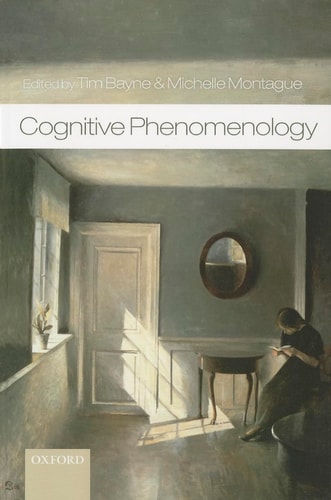
Cognitive Phenomenology
0
0
As an Amazon Associate and affiliate partner, Menrva Books earns from qualifying purchases. Learn more
Author Description
It is widely agreed that there is such a thing as sensory phenomenology and imagistic phenomenology. The central concern of the cognitive phenomenology debate is whether there is a distinctive "cognitive phenomenology"--that is, a kind of phenomenology that has cognitive or conceptual character in some sense that needs to be precisely determined. This volume presents new work by leading philosophers in the field, and addresses the question of whether conscious thought has cognitive phenomenology. It also includes a number of essays which consider whether cognitive phenomenology is part of conscious perception and conscious emotion.Three broad themes run through the volume. First, some authors focus on the question of how the notion of cognitive phenomenology ought to be understood. How should the notion of cognitive phenomenology be defined? Are there different kinds of cognitive phenomenology? A second theme concerns the existence of cognitive phenomenology. Some contributors defend the existence of a distinctive cognitive phenomenology, whereas others deny it. The arguments for and against the existence of cognitive phenomenology raise questions concerning the nature of first-person knowledge of thought, the relationship between consciousness and intentionality, and the scope of the explanatory gap. A third theme concerns the implications of the cognitive phenomenology debate. What are the implications of the debate for accounts of our introspective access to conscious thought and for accounts of the very nature of conscious thought? Cognitive Phenomenology brings the debate to the forefront of philosophy, and provides a state-of-the-art account of the issues at stake.
Menrva's Summary
THE THESIS
This volume investigates whether conscious thought possesses a distinctive, non-sensory phenomenology that is inherently cognitive or conceptual in nature. Editors Michelle Montague and Tim Bayne curate a collection of essays from prominent philosophers to examine the boundaries of conscious experience. The text evaluates the relationship between consciousness and intentionality, utilizing rigorous analytical frameworks to determine if cognitive states contribute to the qualitative character of our mental lives.
THE SCOPE MAP
What You Will Find
- Conceptual definitions of cognitive phenomenology and its potential sub-types.
- Arguments regarding the existence of non-sensory conscious thought.
- Analysis of the intersection between cognitive phenomenology, perception, and emotion.
- Investigations into the nature of first-person knowledge and the explanatory gap.
THE AUTHORITY PERSPECTIVE
Experts identify this volume as a primary resource for those engaged in contemporary philosophy of mind and consciousness studies. Readers frequently note the high level of academic density and the sophisticated argumentative rigor maintained throughout the collection.
Page Count:
388
Publication Date:
2014-10-14
Publisher:
Oxford University Press
ISBN-10:
0198708033
ISBN-13:
9780198708032
Philosophy
Phenomenology
Consciousness
Epistemology
Metaphysics
Community Tags
Similar Books