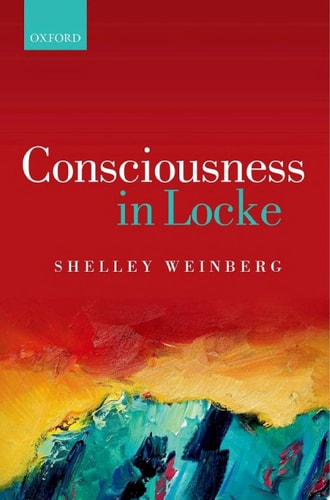
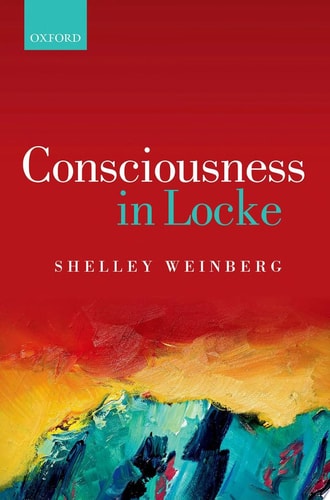
Consciousness in Locke
0
0
As an Amazon Associate and affiliate partner, Menrva Books earns from qualifying purchases. Learn more
Author Description
Shelley Weinberg argues that the idea of consciousness as a form of non-evaluative self-awareness runs through and helps to solve some of the thorniest issues in Locke's philosophy: in his philosophical psychology and in his theories of knowledge, personal identity, and moral agency. Central to her account is that perceptions of ideas are complex mental states wherein consciousness is a constituent. Such an interpretation answers charges of inconsistency in Locke's model of the mind and lends coherence to a puzzling aspect of Locke's theory of knowledge: how we know individual things (particular ideas, ourselves, and external objects) when knowledge is defined as the perception of an agreement, or relation, of ideas. In each case, consciousness helps to forge the relation, resulting in a structurally integrated account of our knowledge of particulars fully consistent with the general definition. This model also explains how we achieve the unity of consciousness with past and future selves necessary for Locke's accounts of moral responsibility and moral motivation. And with help from other of his metaphysical commitments, consciousness so interpreted allows Locke's theory of personal identity to resist well-known accusations of circularity, failure of transitivity, and insufficiency for his theological and moral concerns. Although virtually every Locke scholar writes on at least some of these topics, the model of consciousness set forth here provides for an analysis all of these issues as bound together by a common thread.
Menrva's Summary
THE THESIS
This book investigates whether the concept of consciousness as non-evaluative self-awareness serves as a unifying framework for resolving contradictions in John Locke's philosophical system. Shelley Weinberg, a scholar specializing in early modern philosophy, utilizes a rigorous textual analysis of Locke's primary works to propose that consciousness acts as a constituent element in complex mental states. By positioning consciousness as the mechanism that links perceptions of ideas, the author argues that Locke's theories of knowledge, personal identity, and moral agency form a coherent, integrated structure rather than a collection of disparate or inconsistent claims.
THE SCOPE MAP
What You Will Find
- A re-evaluation of Locke's theory of knowledge regarding the perception of particulars.
- An analysis of the unity of consciousness across temporal states for moral responsibility.
- A defense of Locke's theory of personal identity against charges of circularity and transitivity failures.
Scope Limits
- The text does not provide a general biography of John Locke or a comprehensive history of 17th-century political thought.
- The analysis is restricted to the specific philosophical model of consciousness and its direct implications for Locke's internal consistency.
THE AUTHORITY PERSPECTIVE
Scholars in the field of early modern philosophy recognize this work as a significant contribution to the ongoing debate regarding the internal consistency of Locke's mental model. Readers frequently note the academic density of the prose, which is intended for an audience already familiar with the primary texts of the Enlightenment.
Page Count:
256
Publication Date:
2016-01-01
Publisher:
OUP Oxford
ISBN-10:
0191065854
ISBN-13:
9780191065859
Philosophy
Mind & Body
Epistemology
Consciousness
John Locke
Metaphysics
Philosophy history
Community Tags
Other Editions(3)
Similar Books