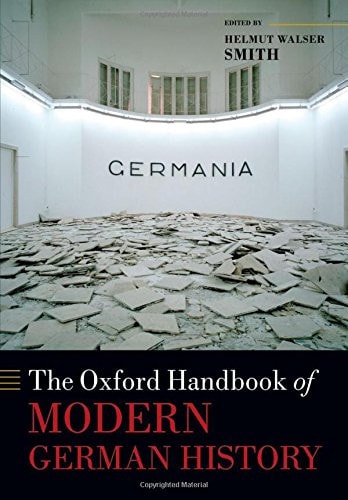
The Oxford Handbook of Modern German History
0
0
As an Amazon Associate and affiliate partner, Menrva Books earns from qualifying purchases. Learn more
Author Description
This is the first comprehensive, multi-author survey of German history that features cutting-edge syntheses of major topics by an international team of leading scholars. Emphasizing demographic, economic, and political history, this Handbook places German history in a denser transnational context than any other general history of Germany. It underscores the centrality of war to the unfolding of German history, and shows how it dramatically affected the development of German nationalism and the structure of German politics. It also reaches out to scholars and students beyond the field of history with detailed and cutting-edge chapters on religious history and on literary history, as well as to contemporary observers, with reflections on Germany and the European Union, and on 'multi-cultural Germany'.Covering the period from around 1760 to the present, this Handbook represents a remarkable achievement of synthesis based on current scholarship. It constitutes the starting point for anyone trying to understand the complexities of German history as well as the state of scholarly reflection on Germany's dramatic, often destructive, integration into the community of modern nations. As it brings this story to the present, it also places the current post-unification Federal Republic of Germany into a multifaceted historical context. It will be an indispensable resource for scholars, students, and anyone interested in modern Germany.
Menrva's Summary
THE THESIS
This volume investigates the trajectory of German history from 1760 to the present, questioning how demographic, economic, and political forces shaped the nation's integration into the modern world. Helmut Walser Smith, a prominent historian, curates a collection of essays from an international team of scholars to provide a comprehensive synthesis of German development. The work argues that war served as a central catalyst for German nationalism and political restructuring, while simultaneously situating the nation within a broader transnational framework. By examining both historical patterns and contemporary issues like the European Union, the text establishes a rigorous academic foundation for understanding modern Germany.
THE SCOPE MAP
What You Will Find
- A chronological analysis spanning from 1760 to the contemporary post-unification era.
- Detailed chapters on religious and literary history alongside traditional political and economic surveys.
- Scholarly synthesis of demographic shifts and their impact on national identity.
- Critical reflections on Germany's role within the European Union and the evolution of a multicultural society.
THE AUTHORITY PERSPECTIVE
Experts identify this volume as a foundational reference for students and researchers seeking a high-level overview of modern German historiography. Readers frequently note the academic density of the prose, which reflects the rigorous standards expected of an Oxford Handbook.
Page Count:
880
Publication Date:
2015-04-01
Publisher:
Oxford University Press
ISBN-10:
0198728913
ISBN-13:
9780198728917
History
Academic
Economic History
Political History
European History
German history
Community Tags
Other Editions(2)
Similar Books