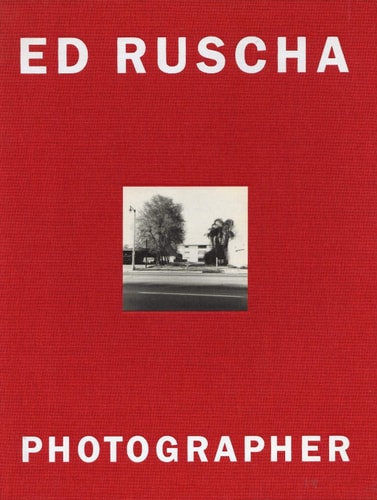
Ed Ruscha, Photographer
0
0
As an Amazon Associate and affiliate partner, Menrva Books earns from qualifying purchases. Learn more
Author Description
Although known for his paintings and drawings, California artist Ed Ruscha has also attracted critical attention for his photography. A new exhibition and accompanying catalogue, Ed Ruscha, Photographer, departs from earlier analyses to explore how the artists different disciplinespainting, drawing, printmaking, and photographyare guided and shaped by a single vision. Ruschas relationship to photography is complex and ambivalent and his work is difficult to define. He has referred to his photography as a hobby but from the outset it has drawn considerable critical interest. The small books of photographs that Ruscha produced in the sixties and seventies earned him a reputation as an underground artist among his peers, and have influenced subsequent generations of artists in Europe and North America. The photographs were snapshot size, with an amateurish quality that intrigued his contemporaries. Neither purely documentary nor solely artistic, their subject matter was stereotypical and banal, with motifs drawn from sites in Southern California or the western United States. This, combined with their serial presentation, created a mythical road-movie or photo-novel effect with Beat Generation innuendos and inspired interest among artists at a time when serial logic was prominent in Pop art and Minimalism, and later in Conceptual art. Margit Rowell is an art historian, critic and museum curator working mostly in Paris and New York. Working independently today, her earlier long-term affiliations were with the Guggenheim Museum, New York, the Musée National dArt Moderne, Centre Georges Pompidou, Paris, and The Museum of Modern Art, New York, where she organized exhibitions of classical modern and contemporary artists (among them Joan Miró, Constantin Brancusi, Sigmar Polke, and Luciano Fabro). In 2004, she organized a major exhibition of the drawings of Ed Ruscha for the Whitney Museum of American Art, which traveled to Los Angeles and Washington, D.C., and inspired the p
Menrva's Summary
THE THESIS
This book examines the complex and often ambivalent relationship between Ed Ruscha's renowned paintings and drawings and his equally significant, though less discussed, photographic work. Ruscha, a prominent California artist, has consistently integrated photography into his artistic practice, even referring to it as a hobby. However, his early photographic books from the 1960s and 1970s, characterized by their snapshot aesthetic and focus on banal, stereotypical motifs from Southern California and the American West, earned him an underground reputation and profoundly influenced subsequent generations of artists. This catalogue, accompanying an exhibition at the Whitney Museum of American Art, aims to explore how Ruscha's diverse disciplines are unified by a singular artistic vision, moving beyond earlier analyses to present a cohesive understanding of his oeuvre.
THE SCOPE MAP
- Exploration of Ed Ruscha's photographic work as a distinct yet interconnected discipline alongside his painting and drawing.
- Analysis of the critical attention and influence of Ruscha's early photographic books from the 1960s and 1970s.
- Discussion of the 'amateurish' snapshot quality and its impact on contemporary artists.
- Examination of stereotypical and banal subject matter drawn from Southern California and the American West.
- The creation of a 'mythical road-movie' or 'photo-novel' effect through serial presentation.
- Contextualization of Ruscha's photographic serial logic within Pop art, Minimalism, and Conceptual art movements.
- Insights into Ruscha's complex and ambivalent relationship with photography, as described by art historian Margit Rowell.
THE AUTHORITY PERSPECTIVE
This catalogue, accompanying an exhibition at the Whitney Museum of American Art, offers a departure from previous analyses by exploring the singular vision that guides Ed Ruscha's diverse artistic disciplines. The book delves into the critical attention his photography has garnered, particularly the influential small books produced in the 1960s and 1970s, which established his reputation as an underground artist. The reception of these works is characterized by their intriguing snapshot aesthetic and focus on mundane, stereotypical motifs, creating a unique narrative effect that resonated with peers and continues to inspire artists. The publication aims to provide a comprehensive look at how Ruscha's photography, despite his own characterization of it as a hobby, is integral to his broader artistic output.
Page Count:
183
Publication Date:
2006-01-01
Publisher:
Steidl
ISBN-10:
3865212069
ISBN-13:
9783865212061
Non-Fiction
Photography
Art
Monographs
Community Tags
Similar Books







Reader Comments
Share Your Thoughts
No comments yet. Be the first to share your thoughts!