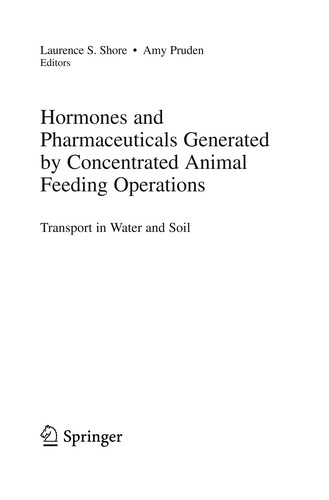
Hormones and Pharmaceuticals Generated by Concentrated Animal Feeding Operations
0
0
As an Amazon Associate and affiliate partner, Menrva Books earns from qualifying purchases. Learn more
Author Description
Hormones and Pharmaceuticals Generated by Concentrated Animal Feeding Operations: Transport in Water and Soil examines how hormones, antibiotics and pharmaceuticals generated from concentrated animal feeding operations (CAFOs) of cattle, poultry, swine and aquaculture are transported in water and soil. Little is known of the environmental fate of the tons of physiologically active steroid hormones released each year. In their own regard, in the last 20 years considerable attention has been given to a wide variety of natural and anthropomorphic agents known as endocrine disrupting compounds (EDCs). Until the contribution of steroid hormones to the environment are better defined, it will be difficult to quantify the exact impact of EDCs. While some advances in the understanding of the fate of these compounds in water has been made, little is known about the processes that govern their transport in soil or how they eventually reach groundwater. As this book discusses extensively, it is somewhat of a mystery how steroids, with their lipophilic nature, strong binding to humic acids and extensive metabolism by soil bacteria, can be transported through even a few centimeters of soil, let alone 20 to 40 meters to the groundwater. With respect to antibiotics, the emphasis is on their fate and transport in the environment and on the emergence of antibiotic resistant bacteria. Impacts on soil ecology, including the impact of antibiotics on the metabolism of other active agents, is also discussed. Similarly, the acaricides and insecticides used in animal husbandry are widely used and their environmental pathways have been studied and have significant impacts on soil and dung ecology. Active compounds with potential environmental impacts, such as growth promoters generated from CAFOs, are described. However, because little is known of their environmental fate, emphasis is placed on defining the gaps in our knowledge and defining their possible effects.
Menrva's Summary
THE THESIS
This book investigates the environmental fate and transport of hormones, antibiotics, and pharmaceuticals originating from concentrated animal feeding operations (CAFOs). It addresses the significant knowledge gaps concerning the release of tons of physiologically active steroid hormones annually and their contribution to endocrine disrupting compounds (EDCs). The text explores the complex processes governing the transport of these lipophilic compounds through soil to groundwater, a phenomenon that remains largely mysterious despite their strong binding to humic acids and extensive bacterial metabolism. Furthermore, it examines the environmental fate of antibiotics, the emergence of antibiotic-resistant bacteria, and the impacts of acaricides and insecticides used in animal husbandry on soil and dung ecology.
THE SCOPE MAP
- Transport of hormones, antibiotics, and pharmaceuticals from cattle, poultry, swine, and aquaculture CAFOs.
- Environmental fate of physiologically active steroid hormones and their role as endocrine disrupting compounds (EDCs).
- Mechanisms governing the transport of lipophilic compounds through soil to groundwater.
- Fate and transport of antibiotics in the environment and the emergence of antibiotic-resistant bacteria.
- Impacts of acaricides and insecticides used in animal husbandry on soil and dung ecology.
- Description of active compounds like growth promoters generated from CAFOs and their potential environmental impacts.
- Identification of knowledge gaps and definition of possible effects of these compounds.
THE AUTHORITY PERSPECTIVE
This book is a technical examination of a critical environmental issue, likely appealing to specialists in environmental science, agricultural science, and toxicology. The author's focus on defining knowledge gaps suggests a research-oriented approach that will be valuable for guiding future studies. The detailed exploration of transport mechanisms in soil and the implications for groundwater contamination indicates a thorough treatment of the subject matter. Its contribution lies in synthesizing current understanding while clearly articulating the areas where further investigation is urgently needed.
Page Count:
147
Publication Date:
2009-01-01
ISBN-10:
0387928332
ISBN-13:
9780387928333
Non-Fiction
Science
Nature
Water Quality
Soil Science
Community Tags
Similar Books