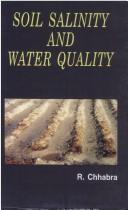
Soil Salinity & Water Quality
0
0
As an Amazon Associate and affiliate partner, Menrva Books earns from qualifying purchases. Learn more
Author Description
This book deals in detail with various factors leading to the genesis of salt-affected soils and the geographical distribution through different continents. Various systems of classifications as followed in literature have been dealt with in detail. Emphasis has been given to anthropogenic factors in the development of soil salinity particularly in the developing countries where human pressure is more obvious due to various reasons. Due emphasis has been given for maintaining salt balance, removing of salts by leaching through flooding, drainage or adopting judicious means of irrigation and applying suitable amendments. Saline agriculture using brackish water is gaining global importance especially in arid areas and along coasts. Criteria for judging the suitability of groundwaters to exploit those for augmenting irrigation potential of the area has been dealt with in detail together with the possibilities of using sewage and industrial effluents for increasing biological production. This book will be useful to students of Soil Science, Agronomy, Plant Physiology, Environmental Scientists, Planners and Technologists in developed and developing countries.
Menrva's Summary
THE THESIS
This book investigates the multifaceted causes and global distribution of salt-affected soils and explores strategies for managing soil salinity and water quality. It details classification systems, emphasizes anthropogenic factors in soil salinization, particularly in developing nations, and discusses methods for maintaining salt balance through leaching, drainage, and judicious irrigation. The text also addresses the growing importance of saline agriculture and the potential of using brackish water, sewage, and industrial effluents for irrigation, providing criteria for groundwater suitability.
THE SCOPE MAP
- Detailed examination of factors contributing to the genesis of salt-affected soils.
- Geographical distribution of soil salinity across continents.
- Comprehensive review of various classification systems for salt-affected soils.
- Analysis of anthropogenic factors driving soil salinity, with a focus on developing countries.
- Strategies for maintaining salt balance, including leaching, drainage, and irrigation management.
- Application of suitable amendments for soil remediation.
- Exploration of saline agriculture using brackish water, especially in arid and coastal regions.
- Criteria for assessing groundwater suitability for irrigation and the use of effluents.
THE AUTHORITY PERSPECTIVE
This book is recognized as a comprehensive resource for understanding and managing soil salinity and water quality issues. Its detailed approach to classification, causes, and remediation strategies makes it a valuable reference for students and professionals in soil science, agronomy, and environmental science. The text is particularly noted for its focus on practical applications and the challenges faced in developing countries. It provides a thorough overview of saline agriculture and the innovative use of water resources.
Page Count:
300
Publication Date:
1996-01-01
ISBN-10:
9054107278
ISBN-13:
9789054107279
Science
Non-Fiction
Water Quality
Agriculture
Soil Science
Agronomy
Community Tags
Similar Books