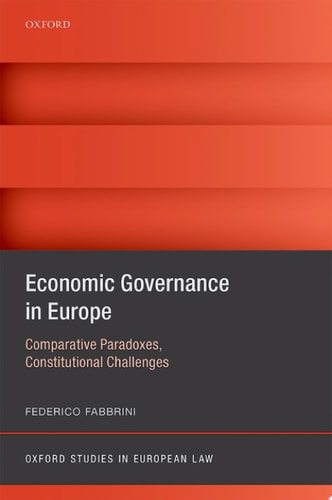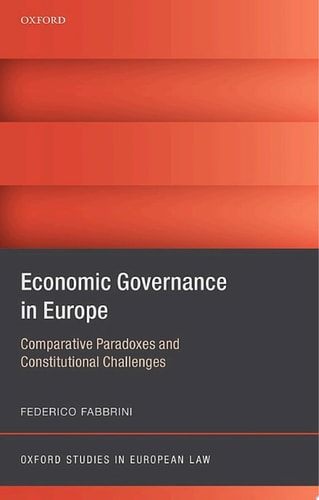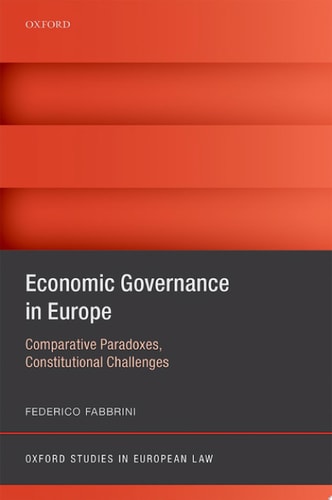
Economic Governance in Europe: Comparative Paradoxes, Constitutional Challenges
0
0
As an Amazon Associate and affiliate partner, Menrva Books earns from qualifying purchases. Learn more
Author Description
The Euro-Crisis and the legal and institutional responses to it have had important constitutional implications on the architecture of the European Union (EU). Going beyond the existing literature, Federico Fabbrini's book takes a broad look and examines how the crisis and its aftermath have changed relations of power in the EU, disaggregating three different dimensions: (1) the vertical relations of power between the member states and the EU institutions, (2) the relations of power between the political branches and the courts, and (3) the horizontal relations of power between the EU member states themselves.The first part of the book argues that, in the aftermath of the Euro-crisis, power has been shifting along each of these axes in paradoxical ways. In particular, through a comparison of the United States, Fabbrini reveals that the EU is nowadays characterized by a high degree of centralization in budgetary affairs, an unprecedented level of judicialization of economic questions, and a growing imbalance between the member states in the governance of fiscal matters. As the book makes clear, however, each of these dynamics is a cause for concern - as it calls into question important constitutional values for the EU, such as the autonomy of the member states in taking decision about taxing and spending, the preeminence of the political process in settling economic matters, and the balance between state power and state equality. The second part of the book, therefore, devises possible options for future legal and institutional developments in the EU which may revert these paradoxical trends. In particular, Fabbrini considers the ideas of raising a fiscal capacity, restoring the centrality of the EU legislative process, and reforming the EU executive power, and discusses the challenges that accompany any further step towards a deeper Economic and Monetary Union.
Menrva's Summary
THE THESIS
This book investigates how the legal and institutional responses to the Euro-crisis have fundamentally altered the constitutional architecture of the European Union. Federico Fabbrini, a scholar of European law, utilizes a comparative framework to analyze the shifting power dynamics within the EU. By contrasting European developments with the United States model, the author argues that recent fiscal governance changes have created paradoxical imbalances that threaten core constitutional values such as state autonomy and political accountability.
THE SCOPE MAP
What You Will Find
- Analysis of vertical power shifts between member states and EU institutions.
- Examination of the judicialization of economic policy and fiscal decision-making.
- Comparative study of the United States and European Union governance structures.
- Proposed legal and institutional reforms to restore legislative centrality and fiscal balance.
THE AUTHORITY PERSPECTIVE
Experts recognize this work as a significant contribution to the study of European constitutional law and the long-term impacts of the Euro-crisis. Readers frequently note the academic density of the prose and the rigor of the author's comparative methodology.
Page Count:
300
Publication Date:
2016-03-28
Publisher:
Oxford University Press
ISBN-10:
0198749139
ISBN-13:
9780198749134
Economics
Public Policy
Constitutional Law
European Union
Law
Community Tags
Similar Books