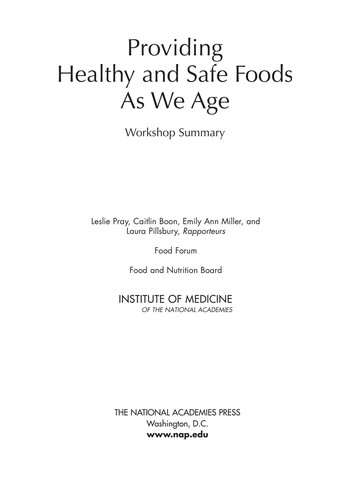
Providing Healthy and Safe Foods as We Age
0
0
As an Amazon Associate and affiliate partner, Menrva Books earns from qualifying purchases. Learn more
Author Description
With baby boomers reaching their 50s and 60s and the growth rate of the U.S. population age 65 years and older expected to double over the next twenty years, the need to prepare for an expanding population of older adults has never been as urgent as it is now. The growing size and changing demographics of aging adults place new demands on the food supply, with older adults not only being more susceptible to certain foodborne illnesses or health complications caused by those illnesses but also likely to experience significant changes in dietary needs and nutrition. While there is still a great deal to learn about what constitutes an "optimal diet" for older adults, available evidence indicates that dietary needs change with aging as a result of sensory loss and other physiological changes, changes in food preparation, and other eating-related behaviors. The fast-growing nature of the U.S. older population also creates new communication challenges with respect to educating older adults about how to manage a nutritious diet, how to prepare and store food safely, and how to act in the event of a safety-related food recall. In recognition of these trends and challenges, the Institute of Medicine's (IOM's) Food Forum convened a one-and-a-half-day workshop in October 2009 to explore food supply issues of relevance to aging adults. Specifically, the purpose of the workshop was to address the questions: What are the future challenges to providing healthy and safe foods to aging populations, and what can be done to meet those challenges?--P. 1.
Menrva's Summary
THE THESIS
The aging of the global population presents significant challenges in ensuring access to healthy and safe food. As the number of older adults rapidly increases, they face unique dietary needs and increased susceptibility to foodborne illnesses, necessitating a re-evaluation of food supply systems and public health communication strategies.
THE SCOPE MAP
- What are the future challenges to providing healthy and safe foods to aging populations?
- What can be done to meet those challenges?
- Changes in dietary needs and nutrition due to aging.
- Increased susceptibility to foodborne illnesses and health complications.
- Communication challenges in educating older adults about nutrition and food safety.
- The role of the Institute of Medicine's (IOM's) Food Forum in addressing these issues.
- Exploration of food supply issues relevant to aging adults.
THE AUTHORITY PERSPECTIVE
This book stems from a workshop convened by the Institute of Medicine's Food Forum, indicating a focus on expert discussion and analysis of critical issues. The content likely addresses the complex interplay between an aging demographic, evolving nutritional requirements, and food safety protocols. The authority perspective would emphasize the need for proactive strategies and research to support the health and well-being of older populations through adequate food provision.
Page Count:
181
Publication Date:
2010-01-01
ISBN-10:
0309158834
ISBN-13:
9780309158831
Non-Fiction
Health
Public Health
Gerontology
Nutrition
Community Tags
Similar Books