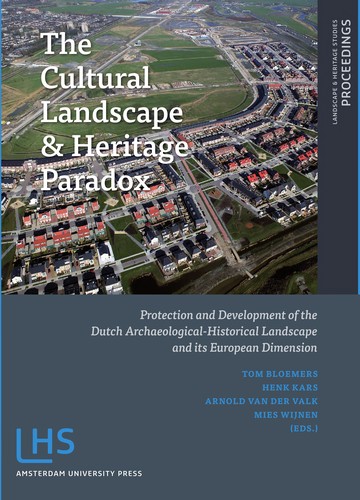
The Cultural Landscape & Heritage Paradox
0
0
As an Amazon Associate and affiliate partner, Menrva Books earns from qualifying purchases. Learn more
Author Description
The basic problem is to what extent we can know past and mainly invisible landscapes, and how we can use this still hidden knowledge for actual sustainable management of landscape's cultural and historical values. It has also been acknowledged that heritage management is increasingly about 'the management of future change rather than simply protection'. This presents us with a paradox: to preserve our historic environment, we have to collaborate with those who wish to transform it and, in order to apply our expert knowledge, we have to make it suitable for policy and society. The answer presented by the Protection and Development of the Dutch Archaeological-Historical Landscape programme (pdl/bbo) is an integrative landscape approach which applies inter- and transdisciplinarity, establishing links between archaeological-historical heritage and planning, and between research and policy.
Menrva's Summary
THE THESIS
The central challenge lies in understanding and utilizing knowledge of past, often invisible, landscapes for the sustainable management of their cultural and historical values. The book addresses the paradox of heritage management, which increasingly involves managing future change rather than solely protecting the past. It explores how to preserve historic environments by collaborating with those who seek to transform them, and how to adapt expert knowledge for policy and societal application. The proposed solution is an integrative landscape approach, exemplified by the Protection and Development of the Dutch Archaeological-Historical Landscape programme (pdl/bbo), which emphasizes inter- and transdisciplinarity to connect heritage with planning and research with policy.
THE SCOPE MAP
- Methods for knowing and understanding past and invisible landscapes.
- Strategies for sustainable management of landscape's cultural and historical values.
- The paradox of heritage management: balancing preservation with transformation.
- The integrative landscape approach as a framework for collaboration.
- Inter
- and transdisciplinary methodologies in heritage and planning.
- Connecting archaeological-historical heritage with spatial planning.
- Bridging the gap between academic research and practical policy-making.
THE AUTHORITY PERSPECTIVE
The book presents a scholarly examination of the complexities involved in managing cultural heritage landscapes, particularly in the Dutch context. It highlights the need for adaptive strategies that accommodate future development while preserving historical integrity. The proposed integrative landscape approach aims to reconcile expert knowledge with societal needs and policy demands. The work is likely to appeal to academics, heritage professionals, and policymakers involved in landscape planning and conservation.
Page Count:
739
Publication Date:
2010-01-01
ISBN-10:
9089641556
ISBN-13:
9789089641557
History
Science & Technology
Non-Fiction
Dutch History
Archaeology
Community Tags
Similar Books