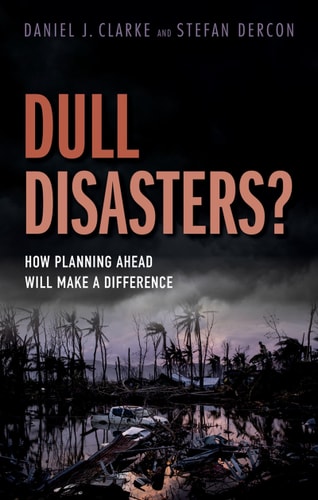
Dull Disasters: How Planning Ahead Will Make a Difference
0
0
As an Amazon Associate and affiliate partner, Menrva Books earns from qualifying purchases. Learn more
Author Description
In recent years, typhoons have struck the Philippines and Vanuatu; earthquakes have rocked Haiti, Pakistan, and Nepal; floods have swept through Pakistan and Mozambique; droughts have hit Ethiopia, Kenya, and Somalia; and more. All led to loss of life and loss of livelihoods, and recovery will take years. One of the likely effects of climate change is to increase the likelihood of the type of extreme weather events that seems to cause these disasters. But do extreme events have to turn into disasters with huge loss of life and suffering?Dull Disasters? harnesses lessons from finance, political science, economics, psychology, and the natural sciences to show how countries and their partners can be far better prepared to deal with disasters. The insights can lead to practical ways in which governments, civil society, private firms, and international organizations can work together to reduce the risks to people and economies when a disaster looms. Responses to disasters then become less emotional, less political, less headline-grabbing, and more business as usual and effective.The book takes the reader through a range of solutions that have been implemented around the world to respond to disasters. It gives an overview of the evidence on what works and what doesn't and it examines the crucial issue of disaster risk financing. Building on the latest evidence, it presents a set of lessons and principles to guide future thinking, research, and practice in this area.
Menrva's Summary
THE THESIS
This book investigates whether extreme weather events must inevitably result in humanitarian disasters and argues that proactive planning can mitigate their impact. Authors Daniel J. Clarke and Stefan Dercon utilize their expertise in economics and policy to propose a framework for disaster risk management. By integrating insights from finance, psychology, and the natural sciences, they demonstrate how governments and international organizations can shift from reactive, emotional responses to systematic, business-as-usual preparedness.
THE SCOPE MAP
What You Will Find
- Analysis of disaster risk financing mechanisms and their efficacy.
- Case studies of extreme weather events in regions such as the Philippines, Haiti, and Ethiopia.
- A multidisciplinary framework combining political science, economics, and behavioral psychology.
- Principles for collaborative action between civil society, private firms, and government entities.
THE AUTHORITY PERSPECTIVE
Experts recognize this work as a significant contribution to the field of disaster risk reduction and development economics. Readers frequently note the clarity with which the authors translate complex financial and political concepts into actionable policy recommendations.
Page Count:
160
Publication Date:
2016-07-16
Publisher:
Oxford University Press
ISBN-10:
0198785577
ISBN-13:
9780198785576
Economics
Climate Change
Public Policy
Finance
Community Tags
Similar Books