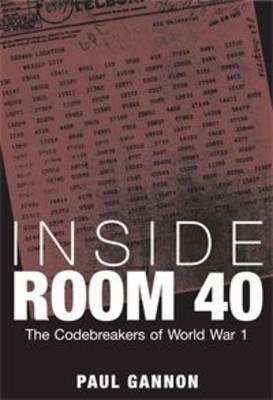
Inside Room 40
0
0
As an Amazon Associate and affiliate partner, Menrva Books earns from qualifying purchases. Learn more
Author Description
When the German cruiser Magdeburg ran aground off the Estonian coast in August 1914, little did the British Admiralty realise that what was onboard the ill-fated vessel would hand them a decisive advantage in the battle for North Sea supremacy and, ultimately, war-winning opportunities. On board the Magdeburg was a collection of secret codebooks which soon offered invaluable clues as the plans and movements of the German High Seas Fleet. Before long, the codebooks used by German warships, U-boats and naval Zeppelins, as well as the ciphers used by the Germans to communicate with their naval attaches and embassies, had been broken by British naval and military codebreakers. Paul Gannon’s vibrant account, based on previously secret files, brings to life hidden stories of British codebreakers in World War I who worked inside Room 40 and its secretive military counterpart, MI1(b). He recounts how intercept intelligence ensured British dominance of the seas, brought the US into the war, won the ‘First Battle of Britain’, changed the military balance in the Middle East and neutered Germany’s international espionage and sabotage operations. Gannon also reveals how extensively Britain listened into the diplomatic communications of neutrals and how codebreaking machinery was first used more than 20 years before its better known appearance at Bletchley Park during World War II. Gannon vividly portrays the brilliant eccentrics who broke tens of thousands of German naval, military and diplomatic messages. This groundbreaking account will change our understanding of how the war was fought and won.
Menrva's Summary
THE THESIS
The discovery of German naval codebooks after the grounding of the Magdeburg in 1914 provided Britain with a critical intelligence advantage that shaped the course of World War I. Paul Gannon's account details how British codebreakers in Room 40 and MI1(b) deciphered German naval, military, and diplomatic communications, leading to significant strategic victories. The book highlights how this intelligence ensured British naval dominance, influenced the United States' entry into the war, and impacted military operations in the Middle East. It also reveals the early use of codebreaking machinery, predating Bletchley Park, and the extensive surveillance of neutral nations' communications.
THE SCOPE MAP
- The capture of the German cruiser Magdeburg and its secret codebooks in August 1914.
- The work of British codebreakers in Room 40 and MI1(b) during World War I.
- How intercepted intelligence led to British dominance in the North Sea.
- The role of codebreaking in bringing the United States into the war.
- Impact of intelligence on military campaigns in the Middle East.
- Details on Germany's international espionage and sabotage operations.
- The extensive British surveillance of neutral diplomatic communications.
- The early development and use of codebreaking machinery.
THE AUTHORITY PERSPECTIVE
Based on previously secret files, Paul Gannon's "Inside Room 40" offers a vibrant account of British codebreakers during World War I. The book is noted for bringing to life the hidden stories of these individuals and their crucial work. It is presented as a groundbreaking work that aims to change the understanding of how the war was fought and won, emphasizing the strategic importance of intercepted intelligence. The narrative focuses on the brilliant minds behind deciphering tens of thousands of German messages, highlighting their impact on major wartime events.
Page Count:
287
Publication Date:
2011-01-01
ISBN-10:
0711034087
ISBN-13:
9780711034082
History
Non-Fiction
Cryptography
Espionage
Naval history
Community Tags
Similar Books