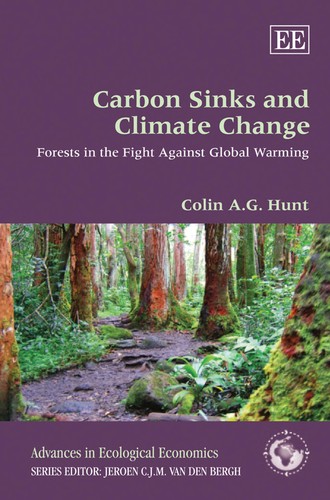
Carbon Sinks and Climate Change
0
0
As an Amazon Associate and affiliate partner, Menrva Books earns from qualifying purchases. Learn more
Author Description
Reforestation and avoiding deforestation are methods of harnessing nature to tackle global warming - the greatest challenge facing humankind. In this book, Colin Hunt deals comprehensively with the present and future role of forests in climate change policy and practice. The author provides signposts for the way ahead in climate change policy and offers practical examples of forestry's role in climate change mitigation in both developed and tropical developing countries. Chapters on measuring carbon in plantations, their biodiversity benefits and potential for biofuel production complement the analysis. He also discusses the potential for forestry in climate change policy in the United States and other countries where policies to limit greenhouse gas emissions have been foreshadowed. The author employs scientific and socio-economic analysis and lays bare the complexity of forestry markets. A review of the workings of carbon markets, based both on the Kyoto Protocol and voluntary participation, provides a foundation from which to explore forestry's role. Emphasis is placed on acknowledging how forests' idiosyncrasies affect the design of markets for sequestered carbon. The realization of forestry's potential in developed countries depends on the depth of cuts in greenhouse gas emissions, together with in-country rules on forestry. An increase in funding for carbon retention in tropical forests is an immediate imperative, but complexities dictate that the sources of finance will likely be dedicated funds rather than carbon markets.--Back cover.
Menrva's Summary
THE THESIS
This book comprehensively examines the role of forests in addressing global warming and shaping climate change policy. Colin Hunt, drawing on scientific and socio-economic analysis, explores how reforestation and avoiding deforestation can harness nature's capacity to mitigate climate change. The book details practical examples from developed and tropical developing countries, analyzing the complexities of forestry markets, carbon measurement in plantations, biodiversity benefits, and biofuel production potential. It also discusses the implications for climate change policy in the United States and other nations considering greenhouse gas emission limits.
THE SCOPE MAP
- Comprehensive analysis of reforestation and deforestation as climate change mitigation strategies.
- Practical examples of forestry's role in climate change mitigation in developed and tropical developing countries.
- Chapters on measuring carbon in plantations, their biodiversity benefits, and potential for biofuel production.
- Discussion of forestry's role in climate change policy in the United States and other countries.
- Scientific and socio-economic analysis of forestry markets, including the Kyoto Protocol and voluntary participation.
- Exploration of how forest idiosyncrasies affect the design of markets for sequestered carbon.
- Emphasis on the importance of funding for carbon retention in tropical forests.
THE AUTHORITY PERSPECTIVE
The book is presented as a comprehensive guide to the role of forests in climate change policy and practice. It aims to provide signposts for future policy and offers practical examples, suggesting it is intended for policymakers, researchers, and practitioners in the field. The analysis covers both scientific and socio-economic aspects, indicating a thorough and detailed approach to the subject matter.
Page Count:
236
Publication Date:
2009-01-01
ISBN-10:
1847209777
ISBN-13:
9781847209771
Science
Non-Fiction
Forestry
Biodiversity
Climate Change
Community Tags
Similar Books