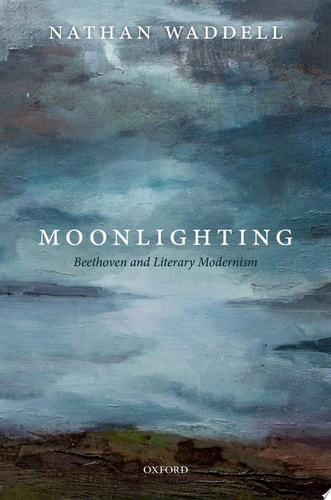
Moonlighting: Beethoven and Literary Modernism
0
0
As an Amazon Associate and affiliate partner, Menrva Books earns from qualifying purchases. Learn more
Author Description
How and why did the life and music of Ludwig van Beethoven (1770-1827) matter to experimental writers in the early twentieth century? Previous answers to this question have tended to focus on structural analogies between musical works and literary texts, charting the many different ways in which poetry and prose resemble Beethoven's compositions. This book takes a different approach. It focuses on how early twentieth-century writers--chief among them E. M. Forster, Aldous Huxley, Wyndham Lewis, Dorothy Richardson, Rebecca West, and Virginia Woolf--profited from the representational conventions associated in the nineteenth century and beyond with Beethovenian culture.The emphasis of Moonlighting falls for the most part on how modernist writers made use of Beethovenian legend. It is concerned neither with formal similarities between Beethoven's music and modernist writing nor with the music of Beethoven per se, but with certain ways of understanding Beethoven's music which had long before 1900 taken shape as habit, myth, cliche, and fantasy, and with the influence they had on experimental writing up to 1930. Moonlighting suggests that the modernists drew knowingly and creatively on the conventional. It proposes that many of the most experimental works of modernist literature were shaped by a knowing reliance on Beethovenian consensus; in short, that the literary modernists knew Beethovenian legend when they saw it, and that they were eager to use it.
Menrva's Summary
THE THESIS
This book investigates how early twentieth-century modernist writers utilized the established cultural myths and legends surrounding Ludwig van Beethoven to shape their experimental literary works. Nathan Waddell, a scholar of modernist literature, moves away from traditional musicological analysis to examine the sociological and representational influence of Beethovenian culture. By analyzing the works of authors such as Virginia Woolf, E. M. Forster, and Aldous Huxley, the text argues that these writers intentionally engaged with popular perceptions and clichés of the composer to construct their own narratives.
THE SCOPE MAP
What You Will Find
- Analysis of the reception of Beethovenian legend in the early twentieth century.
- Examination of literary works by E. M. Forster, Aldous Huxley, Wyndham Lewis, Dorothy Richardson, Rebecca West, and Virginia Woolf.
- Exploration of how cultural myths, habits, and fantasies influence experimental writing.
- A framework for understanding the intersection of musical reputation and literary modernism.
THE AUTHORITY PERSPECTIVE
Scholars and critics recognize this work as a significant contribution to the study of intermediality and the cultural history of modernism. Readers frequently note the academic density of the prose, which provides a rigorous examination of how literary figures navigated the intersection of high art and popular myth.
Page Count:
272
Publication Date:
2019-08-27
Publisher:
Oxford University Press
ISBN-10:
0198816707
ISBN-13:
9780198816706
Biography
Music History
Literary Criticism
Modernism
Community Tags
Similar Books